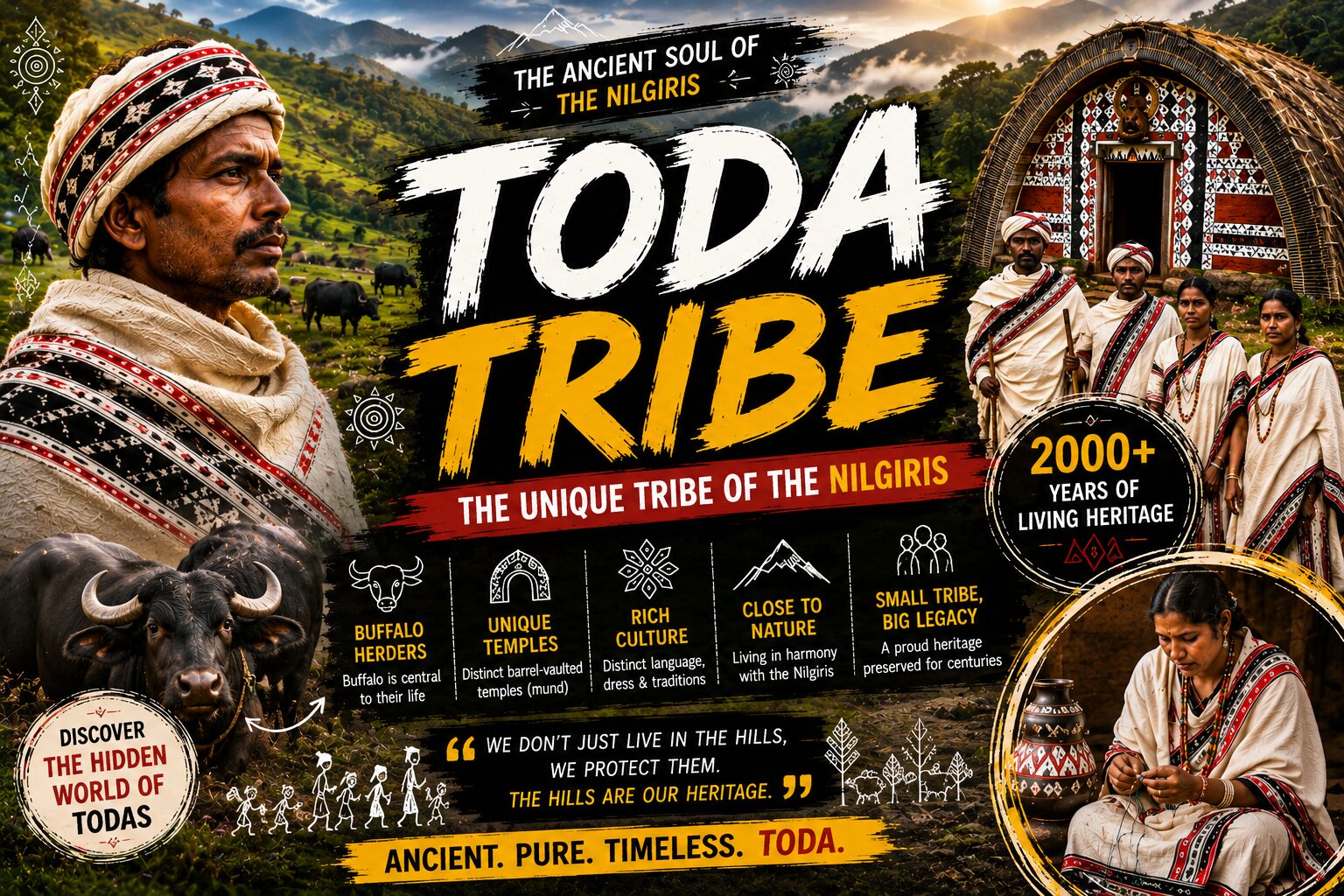
Nestled in the lush green hills of South India, the Todas are one of the most unique indigenous communities in the country. Residing in the breathtaking Nilgiri Hills of Tamil Nadu, this small pastoral tribe is widely known for its distinctive black-and-red embroidered shawls, barrel-shaped huts, and deep spiritual connection with buffalo worship.
The Todas are considered one of the oldest surviving tribal communities in India. Despite modernization and outside influences, they have preserved their language, customs, and traditional way of life for generations. Their rich culture, strong social structure, and eco-friendly lifestyle make them an important part of India’s tribal heritage.
In this article, we will explore the history, culture, dress, homes, religion, and fascinating facts about the Todas in detail.
Who Are the Todas?
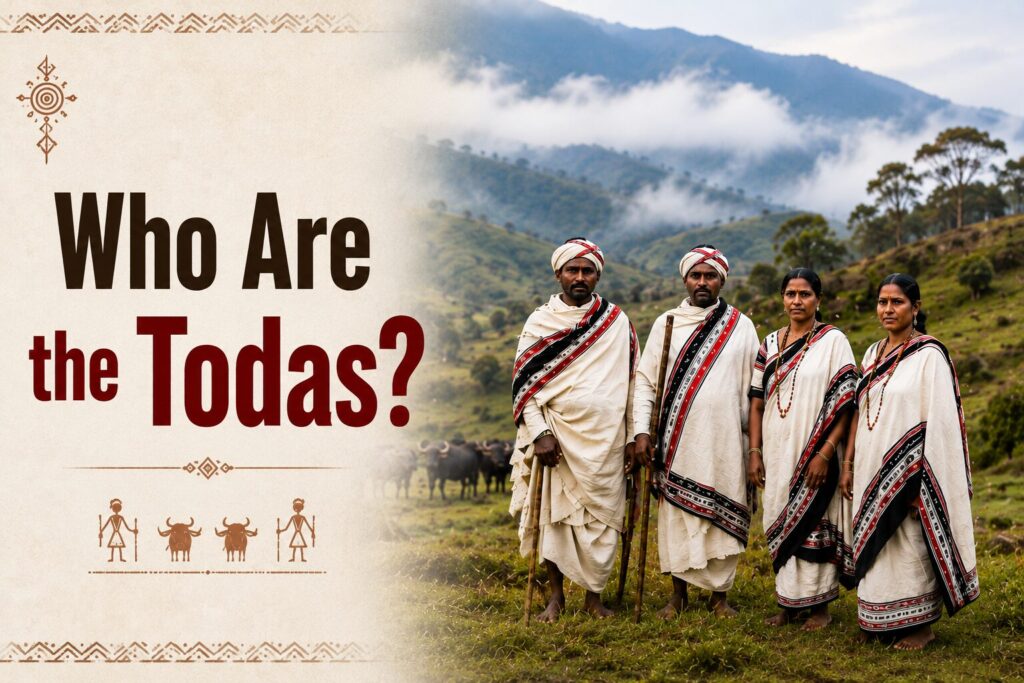
The Todas are a small pastoral tribal community living in the Nilgiri Hills of Tamil Nadu in South India. Traditionally, they are known as buffalo herders, and their entire social, economic, and religious life revolves around the sacred buffalo. Unlike many other tribal groups, the Todas have a distinct dialect, unique customs, and cultural identity that set them apart from neighboring communities.
Location and Traditional Occupation
The Todas are a small pastoral tribal community living in the Nilgiri Hills of Tamil Nadu in South India. Traditionally, they are known as buffalo herders, and their entire social, economic, and religious life revolves around the sacred buffalo. Unlike many other tribal groups, the Todas have a distinct dialect, unique customs, and a strong cultural identity that sets them apart from neighboring communities.
Anthropologists consider the Todas to be one of the oldest surviving tribal populations in the Nilgiris. Their physical characteristics, traditional dress, and distinctive architectural style have long attracted the attention of researchers and historians. Despite their relatively small population today, the community continues to preserve its cultural heritage with pride.
Settlements and Housing
The Todas live in small settlements called munds, which typically consist of three to eight huts, a dairy temple, and grazing land for buffaloes. These settlements are widely scattered across the hills.
Their traditional huts are built on a wooden frame and covered with thatch and stone, forming a distinctive barrel-shaped structure. This unique architectural style is not found elsewhere in India and has become a cultural symbol of the Todas. Their close relationship with nature and livestock plays a key role in sustaining their traditional lifestyle.
Population and PVTG Status
The Todas are officially recognized as one of the Particularly Vulnerable Tribal Groups (PVTGs) of India. Historically, their population was recorded at around 1,000 in 1901. Over time, the numbers declined; however, according to the 2011 Census of India, the population of the Todas was approximately between 1,600 and 2,000. Despite demographic changes, they continue to maintain their distinct identity.
Dialect and Linguistic Significance
The Toda dialect is linguistically unique and culturally significant. It belongs to the Dravidian language family and falls under the Southern branch. The dialect separated early from other South Dravidian languages, making it distinct from Kannada and Malayalam. Even today, many Toda words are not easily understood by speakers of other Dravidian languages, which makes this dialect rare and culturally valuable.
Religion and Spiritual Beliefs
Religion plays a central role in the lives of the Todas. They do not worship idols; instead, they revere the sacred buffalo, which holds deep spiritual importance in their culture. Their temples are simple yet sacred spaces, where a continuously burning lamp symbolizes divine presence. According to their traditional beliefs, the buffalo is closely associated with their local deity and sacred origin stories.
The natural beauty of the Nilgiris, combined with the distinctive lifestyle, traditions, embroidered shawls, and cultural practices of the Todas, continues to attract researchers and tourists alike.
The Fascinating History of the Toda Tribe
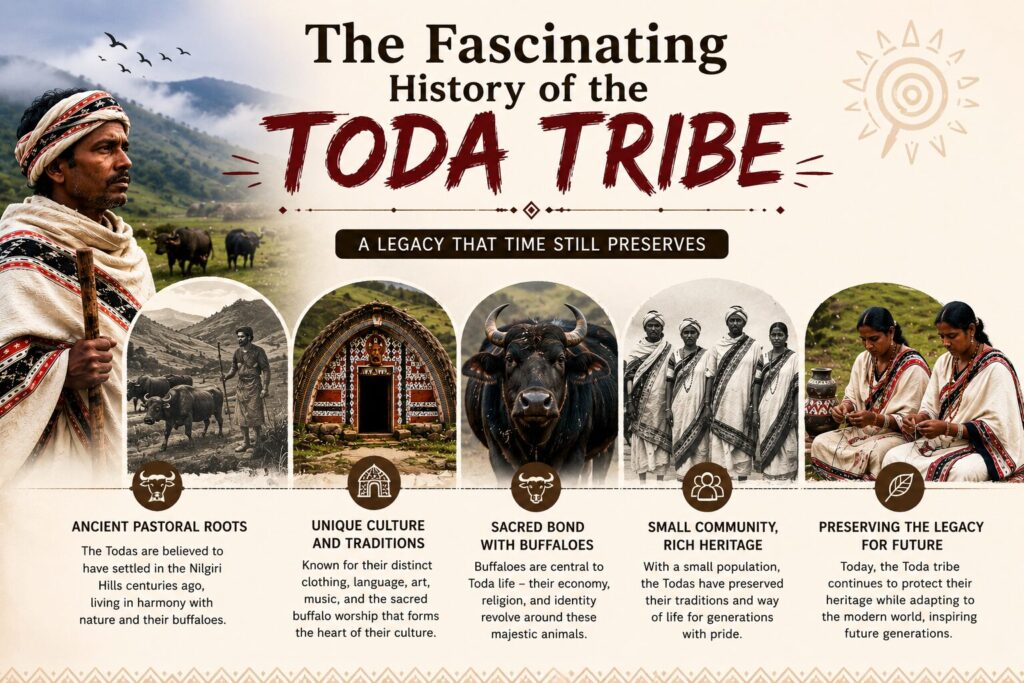
Before modern cities, roads, and technology reached the Nilgiri Hills of South India, the Toda people lived amidst the misty mountains. Known for their unique culture and deep connection with nature, the Toda tribe is considered one of the oldest indigenous communities of the Nilgiris, having inhabited these mountains since time immemorial.
Historians believe that the Todas have lived in the Nilgiri Hills for centuries, although their exact origins remain a mystery. Their history has long fascinated researchers and anthropologists. Unlike many communities that migrated frequently, the Todas developed a distinct way of life closely linked to the grasslands and forests of the region.
One of the most significant aspects of Toda history is their sacred relationship with the buffalo. For the Toda community, the buffalo has never been just an animal. It has always been at the heart of their culture, religion, and daily life. Buffaloes played a central role in social traditions and spiritual practices, and many important rituals and ceremonies revolved around their sacred herds.
Another remarkable feature of Toda heritage is their distinctive barrel-shaped houses, often built using bamboo, wood, and thatch. These unique semi-cylindrical huts were designed to withstand the harsh mountain climate and remain one of the most recognizable symbols of Toda culture.
During the British colonial period in the 19th century, the Nilgiri Hills attracted settlers, tea plantations, and new developments. These changes transformed the landscape and affected the traditional grazing lands of the Toda people. Despite these challenges, the community worked hard to preserve its customs, language, and cultural identity.
Today, the Toda tribe stands as a symbol of cultural resilience. Their distinctive barrel-shaped houses, intricate embroidery, traditional beliefs, and sustainable lifestyle continue to attract researchers, travelers, and culture enthusiasts from around the world.
The history of the Toda tribe is not merely a story of survival. It is a story of how a small indigenous community has protected its identity, traditions, and deep connection with nature for generations.
Where Do the Todas Live?
The Todas live primarily in the Nilgiri Hills of Tamil Nadu, a mountainous region of South India known for its grasslands, dense forests, and cool climate. Their settlements are mainly concentrated around areas such as Ooty (Udhagamandalam), Coonoor, Kotagiri, and the surrounding highlands.
Traditionally, the Todas established small villages known as munds, which usually consisted of a few barrel-shaped huts, sacred dairy structures, and grazing areas for their buffaloes. These settlements were carefully located near grasslands and water sources, reflecting the community’s close connection with the natural environment.
The Nilgiri landscape has played a significant role in shaping Toda culture and traditions. The mountains, grasslands, rivers, and sacred sites are deeply connected to their beliefs, rituals, and way of life. Since time immemorial, the Todas have viewed the Nilgiris not just as a place to live but as an integral part of their cultural and spiritual identity.
Today, while many Toda families continue to live in traditional settlements across the Nilgiri Hills, some have also moved to nearby towns and cities for education, employment, and modern opportunities. Despite these changes, the Nilgiri Hills remain the ancestral homeland of the Toda people and continue to hold immense cultural significance for the tribal community.
Why Are Buffaloes Sacred to the Todas?
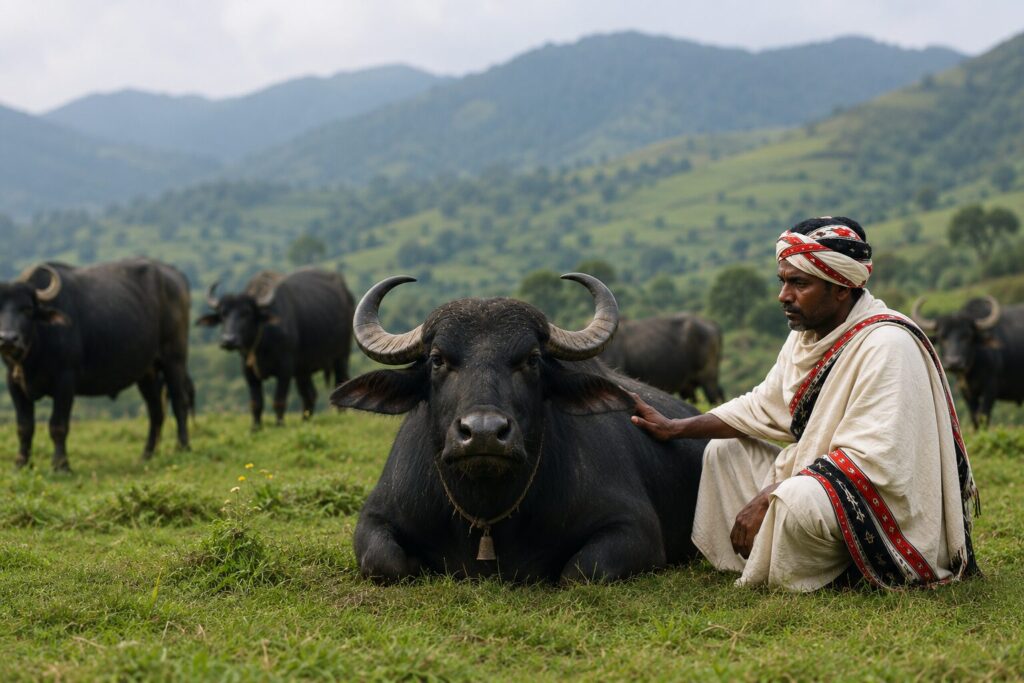
For the Toda people, buffaloes are not merely domesticated animals but sacred beings deeply connected to their religious beliefs and way of life. According to Toda traditions and oral beliefs, buffaloes are closely associated with divine beings and occupy a special place in their spiritual world.
Historically, the Toda economy and lifestyle revolved around buffalo pastoralism. Buffaloes provided milk, butter, curd, and ghee, which were essential not only for daily sustenance but also for religious ceremonies and rituals. As a result, buffaloes came to symbolize prosperity, purity, and divine blessings.
The Todas traditionally maintained sacred dairy temples where milk from specific buffaloes was used for religious purposes. These dairies were regarded as holy places, and the dairy priests followed strict ritual practices while caring for them.
In Toda culture, a person’s social status and wealth were often linked to the number of buffaloes they owned. Buffaloes also played an important role in ceremonies related to birth, marriage, and death, making them an integral part of community life.
Because of their spiritual, economic, and cultural significance, buffaloes came to be revered rather than simply owned. Even today, they remain one of the most powerful symbols of Toda identity, heritage, and connection to the Nilgiri landscape.
Buffalo Rituals and Sacred Ceremonies of the Todas
Buffaloes have long been central to Toda religious life, and many of the Tribe’s rituals and ceremonies revolve around them. For the Toda people, sacred buffaloes are not only a source of livelihood but are also closely linked to their spiritual traditions and cultural identity.
One of the most important aspects of Toda religious life is the sacred dairy temple. These temples serve as religious centers where milk from selected buffaloes is processed and used in ceremonial practices. Traditionally, the dairy priest was responsible for maintaining the temple and performing rituals according to strict religious customs.
Buffaloes are also associated with important life events within the community. Certain ceremonies related to birth, marriage, and death traditionally involve buffaloes or dairy products derived from them. These practices symbolize the deep bond between the Toda people, their livestock, and their spiritual beliefs.
Ritual purity has historically played an important role in Toda religious life. Sacred buffaloes, dairy temples, and priests were expected to follow specific customs and restrictions designed to maintain the sanctity of religious ceremonies.
Many traditional buffalo-related customs have changed over time as the community has adapted to modern life. However, buffaloes continue to hold a revered place in Toda culture and remain powerful symbols of the community’s heritage, spirituality, and enduring connection to the Nilgiri Hills.
Traditional Toda Houses and Architecture
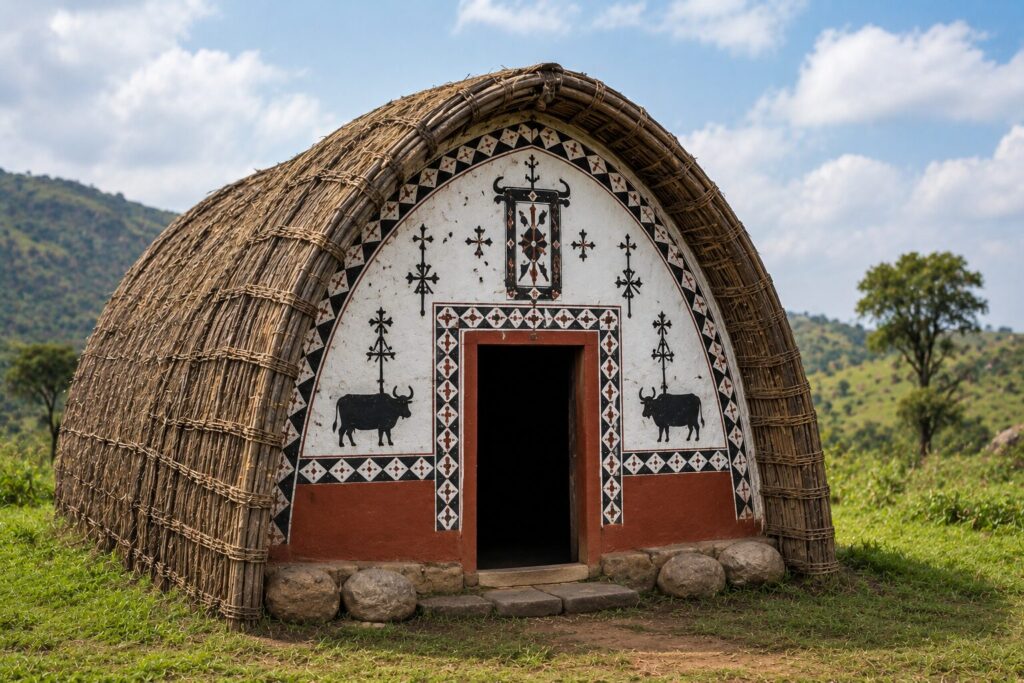
The traditional houses of the Toda people are among the most distinctive examples of indigenous architecture in India. Often described as barrel-shaped huts, these unique structures have been a defining feature of Toda settlements for generations.
Traditionally, Toda houses were built using locally available materials such as bamboo, wood, reeds, and thatch. Their semi-cylindrical design was well suited to the cool climate of the Nilgiri Hills, helping to protect residents from strong winds, heavy rainfall, and low temperatures.
A traditional Toda hut is typically about 3 metres high, 5.5 metres long, and 2.5 to 3 metres wide, although the exact dimensions may vary between settlements. Despite their compact size, these structures were carefully designed to meet the needs of the community while blending harmoniously with the surrounding landscape.
Toda settlements, known as munds, typically consisted of a small group of houses along with sacred dairy structures and grazing areas for buffaloes. The entrance to a traditional hut was deliberately kept small, requiring people to bend while entering. This design helped protect residents from wild animals and harsh weather conditions.
Many traditional Toda houses featured decorative patterns and symbolic motifs around the entrance. These designs reflected the community’s artistic traditions and their close relationship with the natural world.
Although modern houses have become increasingly common among the Todas, traditional huts continue to hold cultural and historical significance. Many have been preserved as symbols of Toda heritage, providing valuable insights into the community’s architectural knowledge and way of life.
Today, these iconic barrel-shaped houses remain among the most recognizable symbols of Toda culture and stand as a testament to the community’s ability to adapt to the unique environment of the Nilgiri Hills.
Toda Embroidery: The Art of Pukhoor
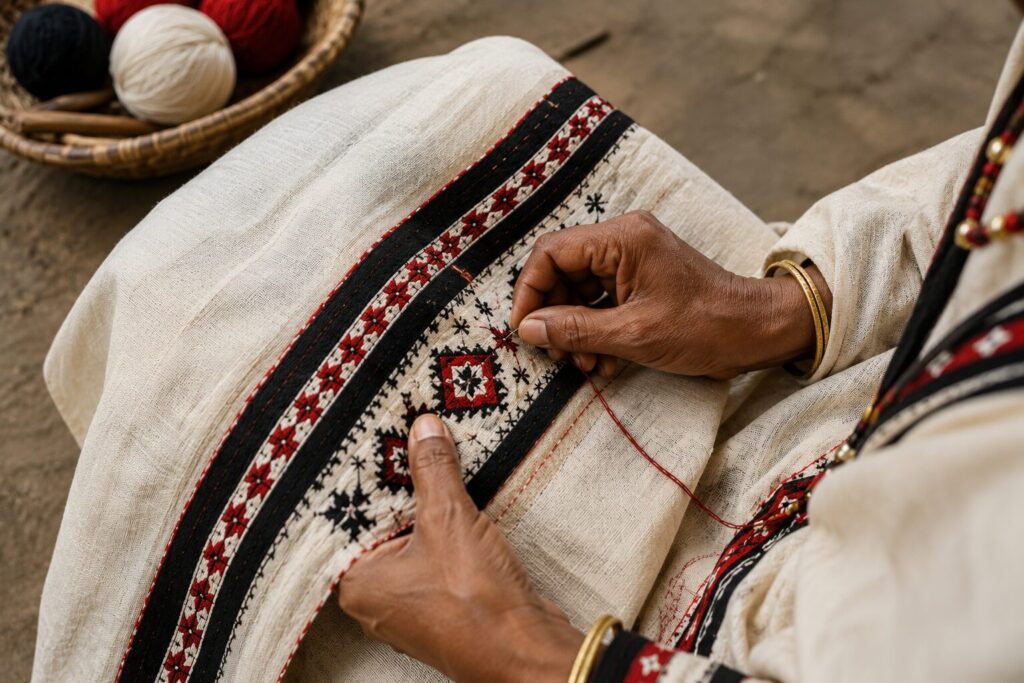
Toda embroidery, locally known as Pukhoor, is one of the most celebrated artistic traditions of the Toda people. Passed down through generations, this unique craft serves as a powerful expression of Toda identity, culture, and craftsmanship.
Traditionally practiced by Toda women, Pukhoor is created using red and black threads on a white cotton cloth. The embroidery is worked from the reverse side of the fabric, resulting in intricate geometric patterns that appear almost identical on both sides.
Many of the designs are inspired by the natural environment and the everyday life of the Toda community. The patterns often reflect the Todas’ deep connection with the Nilgiri landscape, sacred buffaloes, and traditional beliefs.
Toda embroidered shawls, commonly known as Poothkuli, are worn during ceremonies, festivals, and other important occasions. These garments are valued not only for their beauty but also for the cultural stories and traditions they represent.
Today, Toda embroidery is recognized far beyond the Nilgiri Hills and is admired for its distinctive style and skilled craftsmanship. More importantly, it continues to play a vital role in preserving the artistic heritage of one of India’s oldest indigenous communities.
The Toda Language and Oral Traditions
The Toda language is one of the most distinctive aspects of Toda identity and cultural heritage. Spoken primarily by the Toda people of the Nilgiri Hills, it belongs to the Dravidian language family but differs significantly from neighboring languages such as Tamil, Kannada, and Malayalam.
For generations, the Toda language has been passed down orally within the community, helping to preserve traditional knowledge, songs, rituals, and cultural practices. Many aspects of Toda history and beliefs have survived through oral traditions rather than written records.
The Todas people have a rich tradition of oral storytelling, sacred chants, folk songs, and ceremonial recitations that have been passed down from one generation to the next. These oral traditions have played a crucial role in preserving the community’s cultural memory and spiritual heritage.
Linguists consider Toda to be a unique language because of its complex sound system and distinctive vocabulary. Its preservation is particularly important as it provides valuable insights into the history and cultural development of the Nilgiri region.
Today, the Toda language faces challenges due to modernization, education in dominant languages, and changing lifestyles. However, community members and researchers continue to document and preserve this important part of Toda heritage.
Despite these challenges, the Toda language remains a powerful symbol of cultural identity and continues to connect the community with its ancestral traditions.
Festivals and Ceremonies of the Toda People
Festivals and ceremonies play an important role in the cultural and spiritual life of the Toda people. Many of these traditions are closely linked to sacred buffaloes, dairy temples, and the natural environment of the Nilgiri Hills.
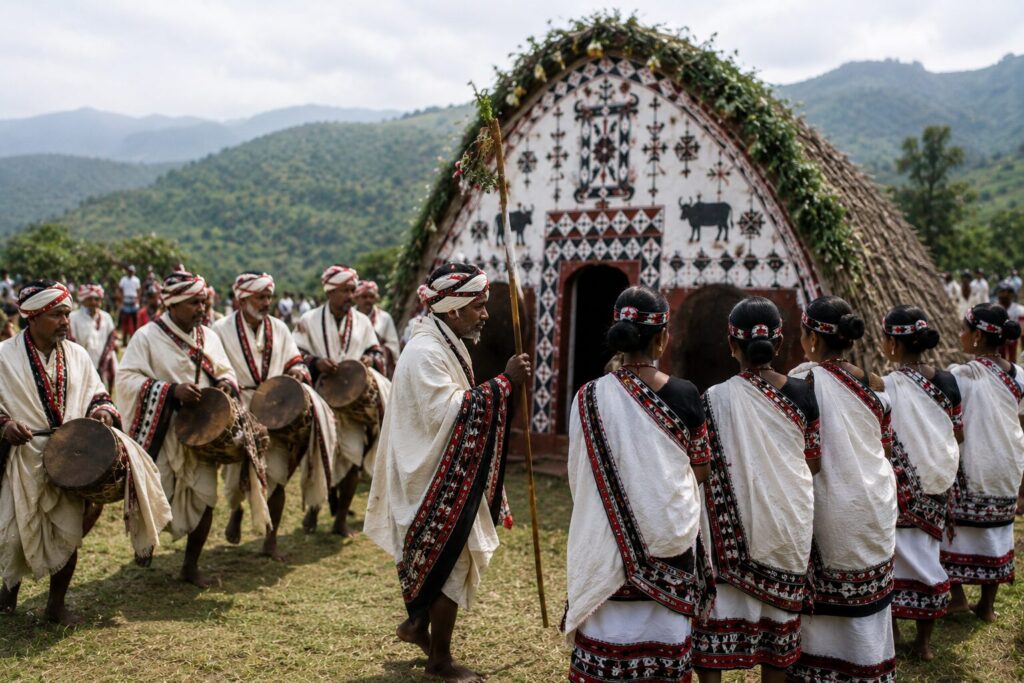
One of the most important festivals celebrated by the Todas community is the Modhweth Festival, which is traditionally observed as the Toda New Year. The festival is marked by prayers, community gatherings, traditional dances, and rituals that reflect the community’s close connection with nature, spirituality, and buffalo pastoralism. It is also an occasion to seek blessings for good health, prosperity, rainfall, and the well-being of the community.
Traditionally, Toda ceremonies have marked important life events such as births, marriages, funerals, and other significant stages of community life. These occasions bring families and settlements together, helping to strengthen social bonds and preserve cultural traditions.
Religious rituals are often associated with sacred dairy temples and involve prayers, offerings, and ceremonial practices performed according to long-established customs. Buffaloes and dairy products frequently play an important role in these ceremonies, reflecting their sacred status within Toda society.
Music, chanting, and traditional songs have long been an integral part of Toda celebrations. These oral traditions help preserve cultural knowledge and pass important beliefs, stories, and customs from one generation to the next.
Although some traditional practices have evolved over time, festivals and ceremonies continue to hold deep cultural significance for the Toda community. Today, they remain an important means of preserving heritage, strengthening cultural identity, and maintaining a connection with ancestral traditions.
Challenges and the Future of the Toda Community
Like many indigenous communities around the world, the Todas face numerous challenges in the modern era. Changes in land use, urban development, shifting lifestyles, and the growing influence of mainstream culture have affected certain aspects of their traditional way of life.
One of the major challenges faced by the Toda community has been the loss of traditional grazing lands. Over the years, the expansion of settlements, tea plantations, and development activities in the Nilgiri Hills has reduced access to areas that were once closely connected to their pastoral lifestyle. As a result, some Toda families have had to adapt to changing circumstances while striving to preserve their cultural traditions.
The Toda language, traditional knowledge, and cultural practices require continued preservation to ensure they are passed on to future generations. Community elders, local organizations, and researchers have played a vital role in documenting and promoting Toda heritage.
At the same time, many Toda families have embraced modern education, employment opportunities, and new forms of economic development. This balance between tradition and modernity has allowed the community to adapt while maintaining a strong sense of cultural identity.
Efforts to preserve traditional architecture, embroidery, oral traditions, and sacred sites have helped raise awareness of the unique heritage of the Toda people. The growing recognition of indigenous cultures has also created new opportunities for cultural preservation and sustainable tourism.
Despite the challenges they face, the Todas continue to demonstrate remarkable resilience. Their enduring connection to the Nilgiri Hills, sacred traditions, and rich cultural heritage ensures that the legacy of the Toda people will continue to inspire future generations.
Conclusion
The Toda people are one of the most distinctive indigenous communities of the Nilgiri Hills, with a cultural heritage shaped by centuries of tradition, spirituality, and a deep connection with nature. From their sacred relationship with buffaloes and unique barrel-shaped houses to their intricate embroidery, oral traditions, and vibrant ceremonies, every aspect of Toda life reflects a rich and enduring cultural identity.
Despite facing challenges such as the loss of traditional lands, modernization, and cultural change, the Todas have shown remarkable resilience in preserving their heritage. Their continued efforts to protect their language, customs, and traditional knowledge serve as an inspiring example of cultural preservation in a rapidly changing world.
Today, the Toda community remains a living symbol of the rich indigenous heritage of India, reminding us of the importance of respecting, preserving, and learning from traditional ways of life.
Your feedback means a lot to us.
If you have any questions, suggestions, or concerns, feel free to leave a comment below. We’re here to listen, grow, and improve together.
THANK YOU…………………………………..THANK YOU…………………………………..THANK YOU…………………………………..