
Tribal religions are among the world’s oldest and most sacred spiritual traditions, firmly rooted in nature and community life. Rather than following a formal religion, tribes embody a way of life that is deeply aligned with the laws of nature. They exist as believers in the reality of their environment, standing apart from conventional categories of theism and atheism. Unlike organised religions, tribal beliefs are transmitted through rich oral traditions, vibrant rituals, and deeply ingrained folk practices that forge a direct connection between people and the earth, forests, rivers, and their ancestors.
These indigenous spiritual practices celebrate harmony with nature, honour tribal gods and goddesses, and involve ceremonies led by shamans or healers. Across continents from Africa to Asia and the Americas, tribal religions maintain distinctive rituals such as nature worship, sacred dances, and healing practices. They represent not just belief systems but vital cultural identities that shape the moral values, festivals, and daily lives of tribal communities.
In our modern world, studying tribal religions reveals essential lessons on sustainability, respect for the environment, and the pursuit of balance with the natural world. Embracing these teachings can profoundly impact how we approach our relationship with nature and our communities.
What Are Tribal Religions?
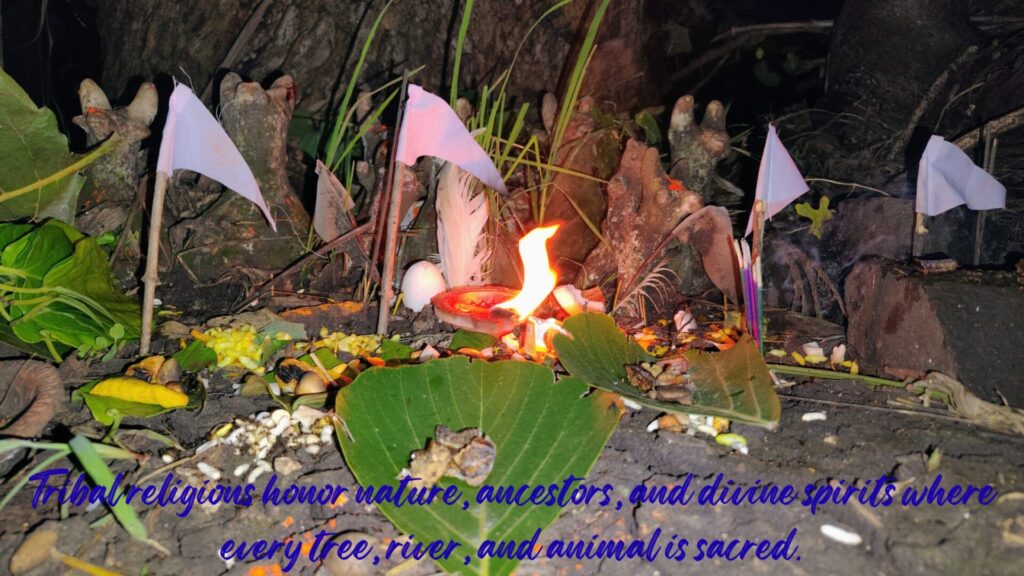
Tribal religions represent ancient belief systems that predate the emergence of organised religions. These spiritual practices are deeply rooted in the experiences and traditions of indigenous communities, drawing from a wealth of ancestral knowledge and a profound connection to nature. Unlike organised religions that rely on written scriptures, tribal religions preserve their teachings through oral traditions, including folk songs, stories, and rituals.
A fundamental aspect of tribal religions is the veneration of natural elements such as the sun, moon, rivers, forests, and mountains, which are regarded as sacred life-giving forces. These belief systems emphasise a harmonious relationship with nature and adherence to its inherent laws. Additionally, many tribal religions encompass beliefs in spirits, gods, and deities that safeguard the community and uphold balance within the universe.
Rituals, healing ceremonies, and festivals are often led by shamans or spiritual leaders, reinforcing the vital connection between humans and the natural world. For indigenous communities, spirituality is ingrained in daily life, interwoven with practices related to agriculture, hunting, and social interactions. In summary, tribal religions embody vibrant and living traditions that reflect the interconnectedness of humanity, nature, and the spiritual realm.
They demonstrate a deep-seated respect for the environment, prioritising its preservation and sustainability, which aligns with the principles of authentic karmic belief.
Echoes of the Past: History and Origins of Tribal Religions
Tribal religions are not merely ancient belief systems; they embody the foundational expressions of humanity’s quest for the divine. Their histories are not documented in conventional holy texts but are instead etched in stone, depicted on cave walls, and preserved through time-honoured mantras. These elements continue to resonate within tribal communities today.
This perspective underscores the idea that spirituality predates the establishment of organised religions, deeply connected to the natural elements of Air, Fire, Water, Sky, and Earth. Tribal communities have consistently revered the five elements, which is why their religious rituals often emphasise the significance of these key aspects.
Spirituality Before Civilization
Before the establishment of cities, monarchies, or temples, small groups of individuals congregated around fires beneath the open sky, forming early tribes. They viewed electricity not merely as a scientific phenomenon but as a potent spirit communicating from the heavens.
Each natural occurrence was regarded as a teacher, protector, and deity. This marked the inception of tribal religions. From the outset, these tribes understood the inherent nature of the world around them, recognising that it exists as it is, without any additional constructs.
The Language of Symbols and Stories
Unlike organised religions, tribal wisdom was never written down. Instead, it was shared through stories, art, and performances. Things like petroglyphs on cave walls, carved wooden masks, and folk dances became their “texts.” Tribes wanted to pass their customs and spirituality to future generations, which is why many of these traditions are still around today. Drumbeats could call upon spirits, feathers could send prayers, and a story from an elder was just as important as a sermon in a temple. These aren’t just fanciful tales; they’re real events shared orally by elders over time.
Ancestors as Eternal Guides
Tribal communities hold a profound belief that the deceased remain an integral part of the living world. Ancestors are seen as protectors of crops, guides for hunts, and blessings for children. Through various religious rituals, these communities honour their ancestors, fostering a sense of continuity in the circle of life.
This belief system has influenced the development of some of the earliest forms of spirituality and continues to be preserved in contemporary practices. A poignant expression of this reverence occurs during the Var festival, where the first ancestors are commemorated with offerings of grain, water, and honey.
Nature as the First Temple
The air, forests, rivers, mountains, and sky were revered as living beings, breathing alongside us. Unlike today’s notion of “places of worship,” the entire earth was a sacred temple. By offering food, folk songs, and folk dances to these energies, tribal communities forged a deep connection with nature, teaching themselves the invaluable art of living in balance with the world around them. This wisdom is now being rediscovered in the modern era. Observe their folk dances, filled with positivity and gratitude, celebrating the profound beauty of nature.
Faith and Resistance: Tribal Leaders Who Fought for Adivasi Religions
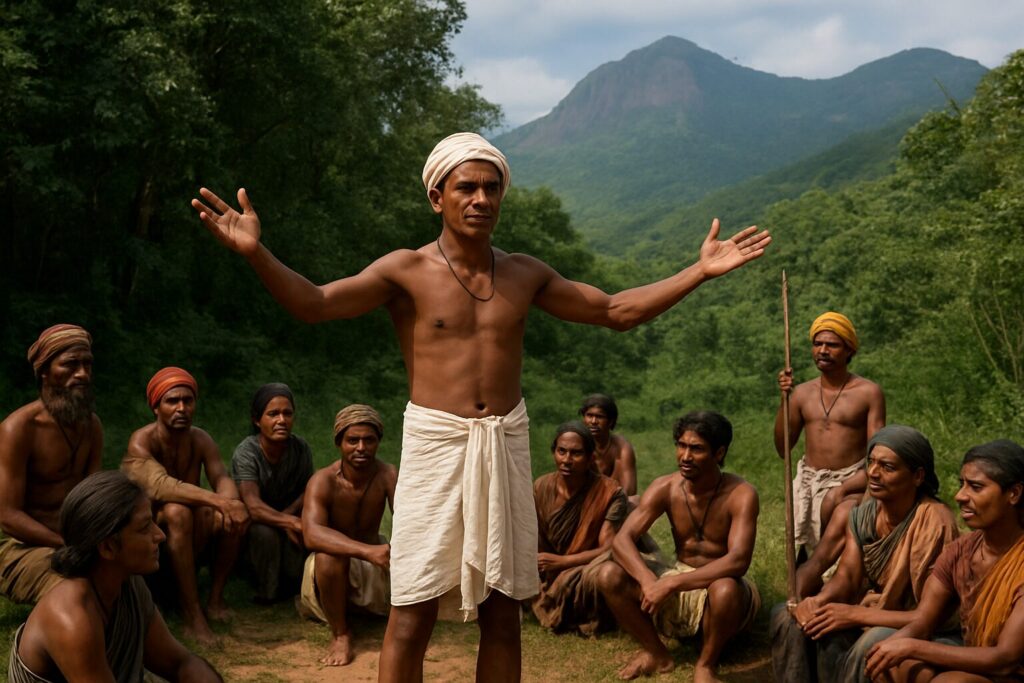
Tribal religions have always been more than rituals; they embody the essence of identity and existence. In the face of discrimination, forced conversions, and exploitation, mighty tribal leaders rose to protect their faith. Their struggle transcended politics; it was a profound spiritual battle for their customs and their very identity.
Birsa Munda, Saviour of the Tribal Faith
In the late 19th century, Birsa Munda emerged as a significant spiritual and political leader. Throughout his early life, he observed that while various communities had established religions, tribal groups often lacked this identity. He advocated for a belief system that resonated with the natural world, emphasising the interconnection of forests, land, and spirituality.
“Birsa Munda roared that if the forest were lost, the gods of the Adivasis would vanish, and with them, the very soul of his people.” – BIRSA MUNDA
Birsa firmly believed that the destruction of forests would lead to the disappearance of the tribal deities. Through his Ulgulan, or Great Rebellion, he valiantly defended tribal religions against exploitation, forced conversion, and discrimination. Birsa Munda’s life story became a powerful symbol of resistance, underscoring the importance of preserving cultural identity and faith as fundamental to survival.
Jaipal Singh Munda: The Voice of Modern India
“We Adivasis are not backwards people. We are the original sons of this soil, with our own gods, our own faith, and our own culture that must be recognised with dignity.” – Jaipal Singh Munda (Constituent Assembly, 1946)
In the Constituent Assembly of India, Jaipal Singh gave a voice to tribal communities who had been ignored for a long time. He stated that tribal are not “backwards peoples” but have their own religions, gods, and identities. They want to be recognised as tribals and nothing else. Jaipal fought against discrimination, pressure from missionaries, and social exclusion. He ensured that tribal beliefs were recognised as an integral part of our heritage and not overlooked by dominant narratives. He always raised these issues in the Lok Sabha.
Religion as a Shield Against Discrimination
For tribal communities, religion is more than prayer; it is part of their identity and culture. Every festival, sacred forest, and ritual shows their pride. By keeping their ancestral gods and nature-based beliefs, they resist centuries of oppression. Tribal religions protect them from forced assimilation. They send a clear message: “We exist, we believe, and we will not disappear.”
“The gods of the hills and the spirits of the forest give us strength—no foreign power can take away our dharma.“-Tilka Manjhi (tribal leader, 1784 rebellion)
Jal, Jungle, Zameen: The Living Heart of Tribal Religions
Tribal communities view religion as part of their daily lives. It connects closely with water, forests, and land. These elements are not just resources; they are sacred. Only the tribal people fully understand their importance. Sadly, modern development often destroys these natural resources, even though tribal groups have always worked to protect nature. For them, caring for nature is like honouring their gods, and harming it is seen as a sin against their ancestors. In tribal beliefs, water, forests, and land create a holy trinity of existence, forming the heart of their faith and way of life.
Water as Sacred Spirit
Many cultures view rivers and streams as important deities. Festivals often start with offerings of water because it is essential for crops, livestock, and human life. Polluting water is seen as a serious wrongdoing against these divine spirits. People have recognised that life cannot exist without water for generations. Tribal communities honour water as a mother and show their gratitude. This tradition remains strong today.
Forest as Sacred Temple
Tribal religions consider the forest to be their true temple. They believe that every tree and hill has a spirit, making each hill sacred. Important places like Sarana Sthal for the Oraons and Devgudi for the Gonds are where the community gathers to pray. This shows that the forest itself is their temple. The forest also helps them stay healthy and fit.
Land as Mother and Faith
Soil is important and is often referred to as Mother Earth, as it supports and nurtures all life. Losing land is not just a physical loss; it also causes a deep spiritual injury. Many tribal communities have suffered this loss for years. Protecting agricultural land and sacred hills is vital for respecting their beliefs and ensuring the safety of future generations.
Divine Beings in Fur and Feathers: Animals in Tribal Religions
In tribal religions, animals are more than just animals; they are seen as sacred beings with special powers. They protect the forest, support life, and serve as messengers between people and the spiritual world. Animals also help guard crops and are companions to humans, and they are worshipped in local traditions. In tribal villages today, people still honor animals. For these communities, respecting animals is not just about worship; it is a way to live in harmony with nature.
The Tiger Spirit of Strength and Protection
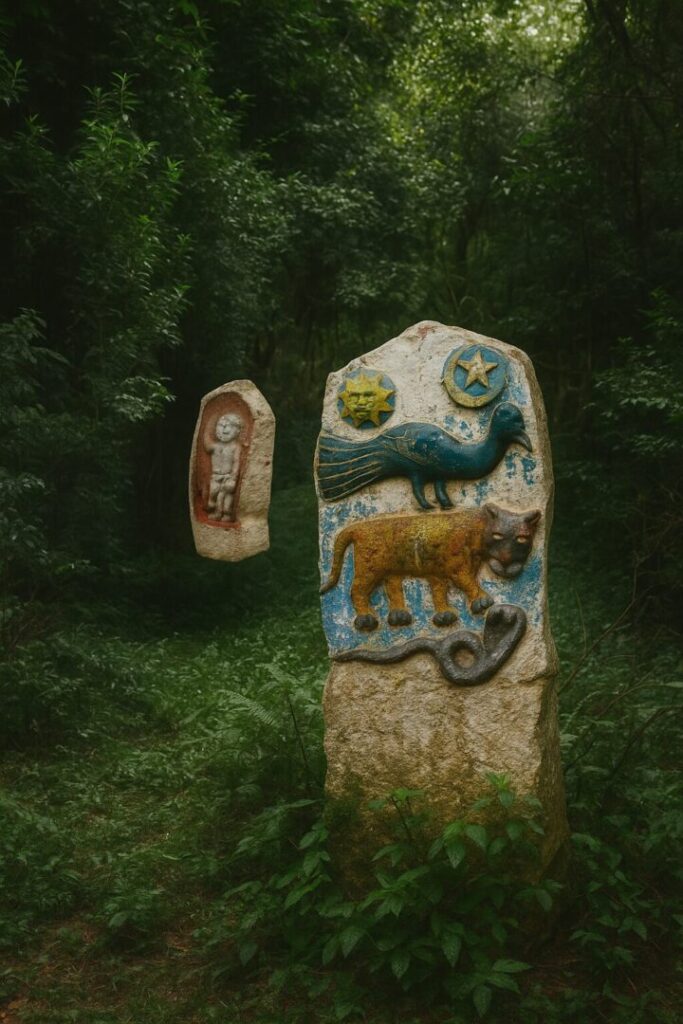
The tiger is seen as the protector of the forest. Many tribal communities believe that its spirit keeps hunters, farmers, and villages safe from harm. Elders pass this belief down from generation to generation. Today, the survival of many wild animals depends on the efforts of these tribes.
The Serpent Symbol of Fertility and Water
In tribal traditions, snakes are sacred and often linked to water and fertility. People hold festivals and rituals to offer gifts to serpent deities, hoping for good rain and healthy crops. Snakes are also seen as farm gods that protect crops and mark boundaries. Ancestors have worshipped them, making them an important part of tribal religion.
The Bull A Partner in Survival
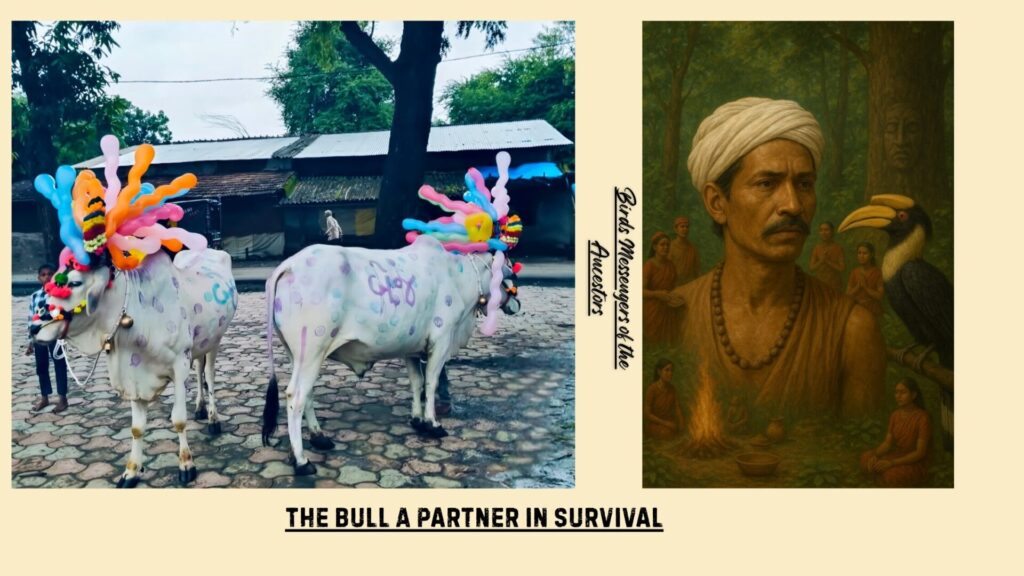
The bull is celebrated in festivals like Bel Pola, where people show gratitude for its important role in farming. For tribal communities, the bull is more than just livestock; it is seen as a divine companion. It is also part of a festival and is viewed as a gift from religion.
Birds Messengers of the Ancestors
Birds, like hornbills and peacocks, are seen as messengers from ancestors. In Nagaland, India, tribes hold a festival just for the hornbill bird. During this festival, folk songs and flights are believed to connect people to the spiritual world.
From Forests to Cities: The Modern Challenges of Tribal Religions
Tribal religions, which focus on nature and forests, are facing serious challenges today. For many years, these beliefs centred around water, land, and forests. Now, urbanisation, migration, and modernisation are disrupting these important connections. Tribal communities are struggling with economic issues and cultural changes while working to keep their spiritual identities. Additionally, religious conversion has become a sensitive topic, causing many tribal groups to seek recognition for a separate religion and to start movements aimed at preserving their way of life.
Migration and Urban Pressure
As many tribal communities move to cities for jobs, their connection to sacred lands and rituals weakens. Nature has been replaced by concrete buildings, which hurts their traditions. This may lead to questions about the future of these tribes remaining unanswered. Many people are losing their cultural identity, and many others seem to be waiting without direction.
Loss of Land and Forests
Deforestation and mining projects have displaced tribal communities from their sacred lands. When land is lost, religious beliefs are also compromised, as nature is revered. Tribal communities are the guardians of natural resources.
Conversion and Cultural Erosion
The pressures of religious conversion and the influence of mainstream culture frequently overshadow indigenous spiritual beliefs, posing a significant threat to the preservation of tribal spiritual practices.
Identity Crisis Among the Youth
Many young people find themselves at a crossroads, navigating the demands of modern education while also trying to honour the wisdom of their ancestors. Understandably, they may start to question their relationship with tribal religions in a world that often feels so different from the traditions of the past. This journey can be challenging, as they seek to find their place and purpose in a rapidly changing society.
FAQ
What are tribal religions?
Tribal religions are indigenous belief systems practised by Adivasi and native communities. They are deeply rooted in nature worship, ancestral traditions, and communal rituals.
How are tribal religions different from major world religions?
Tribal religions differ from organised religions in that they are oral, nature-centred, and community-driven, emphasising harmony with the land, animals, and ancestors.
Do tribal communities worship animals?
Yes, many tribal groups consider animals as divine beings or spiritual guardians. Tigers, snakes, bulls, and birds often hold sacred significance in their rituals.
Why is land so important in tribal religions?
For Adivasis, water, forest, and land are not merely resources but sacred elements of their faith. Losing land equates to losing temples, rituals, and identity.
What challenges do tribal religions face today?
Modernisation, deforestation, migration to cities, religious conversion pressures, and cultural assimilation are major threats to the survival of tribal religions.
Who are some famous tribal leaders who defended tribal religions?
Leaders like Birsa Munda, Jaipal Singh Munda, and Tilka Manjhi raised their voices against exploitation and fought to protect tribal culture, religion, and identity
Conclusion: The Soul of Tribal Religions in a Changing World
Tribal religions are living traditions that focus on harmony with nature, community unity, and ancestral knowledge. They show us that spirituality exists without temples or scriptures. It can be found in the rhythm of rivers, the shade of trees, and the heartbeat of the Earth. Tribal religions are part of their culture, customs, and practices. Today, these religions face challenges from rapid urbanisation, land loss, modernisation, and struggles for identity.
Despite this, tribal communities show great resilience. Leaders like Birsa Munda and Jaipal Singh Munda proved that protecting one’s faith is about protecting dignity. Their ideas are now helping today’s youth overcome their own challenges. To truly respect diversity, we must honour, preserve, and celebrate tribal religions. Their wisdom teaches us that nature is part of us, and respecting it brings lasting happiness.
Your feedback means a lot to us.
If you have any questions, suggestions, or concerns feel free to leave a comment below.We’re here to listen, grow, and improve together.
Thank you for being a part of this journey.