

On October 5, 1524, the land of Gondwana welcomed the birth of a special child, Rani Durgavati. She would grow up to be known as a warrior queen and a symbol of tribal pride, female strength, and unwavering resistance. In her time, being a queen in a tribal kingdom meant that men and women often received equal treatment, a practice that still exists in many tribal communities today.
Her birth was not just a date on a calendar; it signified the arrival of someone who would protect the forests, rivers, and mountains. To her people, she was more than just a queen; she represented nature, showing both the strength of stone and the kindness of water. Today, when we remember October 5, we recall the queen who chose death over surrender and courage over compromise. Tribal communities across India honour her legacy with pride.
The Dawn of 5 October 1524 Birth of a Warrior Queen
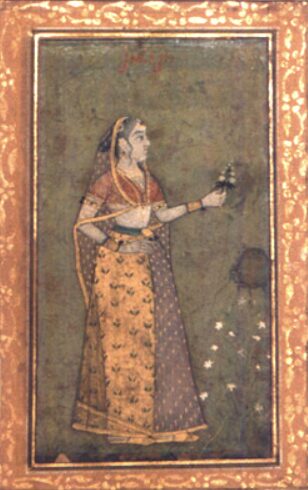
On October 5, 1524, a girl named Rani Durgavati was born, and she would grow up to be known as the heart and protector of Gondwana. She was born into the Chandel family in Mahoba. While many people would later refer to her family as “Rajput,” it’s important to know that they originally had tribal roots, deeply connected to the land and the people of central India.
Rani Durgavati was not just a princess of the Rajputs; she represented a strong link between her tribal background and her royal responsibilities. She balanced the simplicity of her early life with the complexities of being part of a royal family. Her birth was a significant moment, marking the beginning of a powerful legacy. The rich forests, flowing rivers, and rolling hills of Gondwana welcomed not just a future queen, but a protector who would stand by her people and ensure their safety for generations to come.
Gondwana’s Daughter Childhood Amidst Forests and Forts
Tribal communities have led since ancient times, and Gondwana has a strong history of tribal empires. Rani Durgavati grew up influenced by two key aspects: royal discipline and her tribal background. The forts provided her with a solid education, while the forests and rivers of Gondwana helped her connect with her people. She learned statecraft and warfare but also embraced important values like resilience, compassion, and unity that represent the tribal spirit. This unique upbringing set her apart from many other princesses. Durgavati was prepared for leadership, not a life of comfort.
Early Training in Courage and Weapons
From a young age, Rani Durgavati demonstrated a remarkable spirit that distinguished her from her peers. Unlike many princesses who enjoyed a life of comfort, she committed herself to rigorous training as a warrior. With the guidance of accomplished mentors, she honed her skills in archery, spear fighting, and swordsmanship. Her days were devoted to horseback riding and honing her martial abilities, while her evenings were spent studying strategy and defence.
This disciplined regimen was not merely an obligation for her; it was a profound passion. She embraced each aspect of her training, as if fate was preparing her for the challenges that lay ahead. As she matured, she earned a reputation for her exceptional hunting prowess. Folklore recounts that her precision with a bow was so impressive that even seasoned warriors admired her skill and bravery. These formative experiences were more than mere practice; they laid the groundwork for her emergence as a courageous and effective queen.
Bond with Gondwana’s Nature and People
Rani Durgavati was born into royalty, but she loved the forests, rivers, and hills of Gondwana. She did not sit safely behind palace walls; she spent time with her people, listened to their folk songs, and learned from their wisdom. She embraced the tribal festivals, customs, and daily struggles of her people. Durgavati realised that true power comes not just from armies and weapons, but from communities being united and connected to the land.
The tribal empire was all about community. The rivers taught her patience, the forests gave her courage, and the mountains showed her resilience. Nature gives us lessons and understanding. This close bond with nature helped her see her kingdom as a living spirit, where the people and the land are one. This connection motivated her to fight not only as a queen defending her throne but also as a daughter of Gondwana who wanted to protect her family, her land, and her people.
The Truth of the Chandel Dynasty From Tribal Roots to Rajput Identity
In 1540, Dalpati Shah married the daughter of King Shalivahan from Rath-Mohaba, who represented the Chandel symbol. There are different stories about Durgavati’s marriage. Some historians claim that the Chandel king was from a high caste, while Dalpati was from a lower caste. However, this is incorrect, as the Chandel king was also part of the Gond community. Vincent, a senior official under British rule, noted that the Chandels came from a primitive caste, specifically the Garhwal Gonds. R.C. Majumdar, an Indian writer, agreed, stating that they were seen as a primitive caste but later classified as Kshatriyas in Brahminical society. S.S. Bose and R.V. Russell also view them as descendants of the Bhariya Gonds.
In their community, the Chandel clan symbolises the rabbit. However, under the influence of Brahmanism, they separated from their original clan and, viewing themselves as superior, organized a swayamvar for their daughter. Dalpati Shah arrived at the swayamvar with his army, granted permission by his powerful father, Sangram Shah. When Queen Durgavati recognised Dalpati Shah’s bravery, she offered him a garland of honour. This gesture angered the other Chandel kings, who rose in protest against it. However, those groups of kings were ultimately defeated.
The Indomitable Spirit of Gondwana Rani Durgavati Against the Invaders
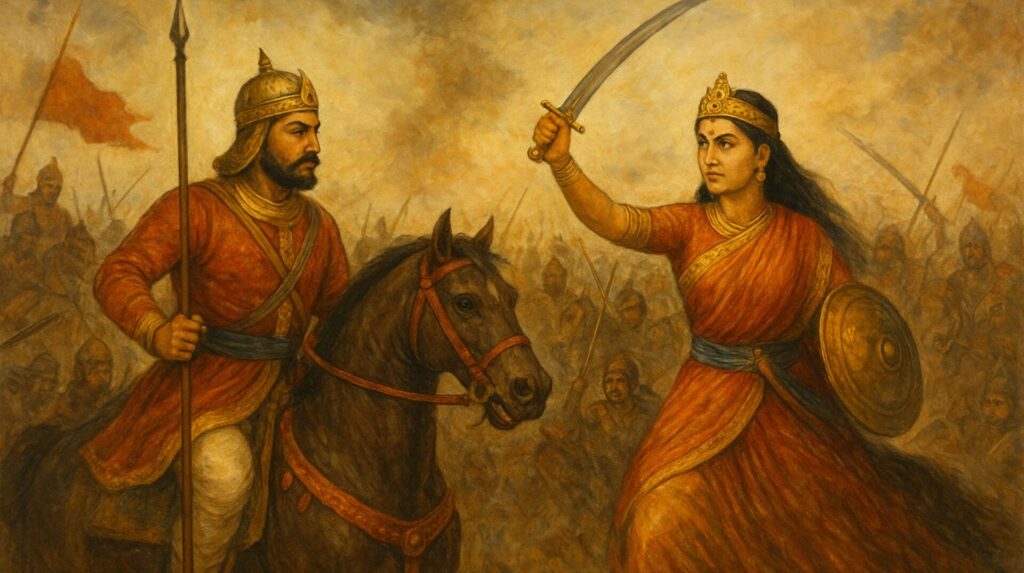
When the Mughal Empire started to move into central India, the peaceful hills and forests of Gondwana were in danger. Queen Durgavati was the leader of this kingdom. She was brave and strong. Durgavati knew that her people and land needed her. Instead of giving up, she decided to fight back and took on the responsibility of being a leader. She didn’t just gather soldiers. She also learned about the land, built defences, and inspired her people to stand up against the larger enemy. Every part of the land showed her determination: Gondwana would not give up.
Rising Threats from the Mughals
The Mughal army, led by Asaf Khan, moved toward central India to conquer Gondwana. They had a large, well-equipped, and experienced force. News of their advance spread quickly, causing fear in nearby regions. However, Queen Durgavati remained steadfast. She studied the enemy closely, looked at their strengths and weaknesses, and prepared for a battle that would test her military skill and her ability to inspire her people.
Even with the significant power difference, Rani Durgavati saw the Mughal threat as a chance to show Gondwana’s strength. She reached out to neighboring allies, improved border defences, and made sure her people were ready for the fight ahead. Her strategic thinking set the stage for a war that would be remembered as a sign of her strong spirit. She chose to fight instead of surrendering, valuing self-respect and the dignity that comes with heroism.
Strengthening Gondwana Army and Fort Preparations
Rani Durgavati recognised that the future of her kingdom hinged on both preparation and collective strength. She took charge of reinforcing the main strongholds, particularly focusing on the Singorad fort, which evolved into the central pillar of Gondwana’s defences. Soldiers underwent rigorous training, while local tribal warriors were incorporated into structured military units, merging their traditional guerrilla skills with formal warfare tactics.
Understanding the importance of resources, she ensured the accumulation of substantial stockpiles of food, weapons, and ammunition. The queen also took the time to travel to various villages, rallying the populace to support the kingdom’s defence efforts and inspiring unwavering loyalty through her dedication and charisma. Her pragmatic approach to leadership stemmed from her belief that courage could inspire others if she remained steadfast; her subjects would find the strength to do the same.
Leading from the Front The Warrior Queen in Battle
When the Mughals advanced, Rani Durgavati chose not to stay behind palace walls like other kings. She led her army, wearing armour and carrying a sword, ready to fight. Her presence inspired her soldiers, who saw her as a warrior, not just a queen.
She fought bravely, often facing enemy soldiers herself and showing her skill with weapons and tactics. During battles, she stayed calm, gave orders, motivated her troops, and adjusted plans as needed. Her bravery made her legendary, becoming a symbol of resistance for Gondwana and all of India. Today, tribal folk songs in the Gondi dialect still celebrate her remarkable story.
Echoes in the Forest: Folk Songs and Oral Tales of Rani Durgavati
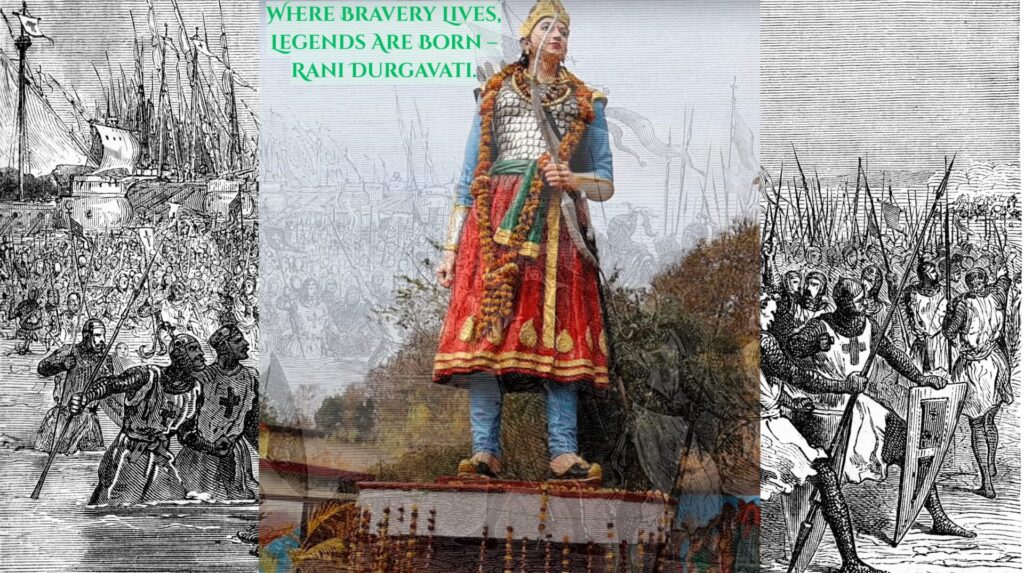
Even after the upheaval of war has subsided and empire-builders have chronicled their interpretations of history, the true legacy of Rani Durgavati persists not in written texts but through the oral traditions of her people. In the remote villages of Madhya Pradesh and Chhattisgarh, as well as among the Gond and Bhil communities, her narrative is meticulously preserved in folk songs, oral histories, and tribal ballads, which are shared around fires, during festivities, and throughout harvest celebrations.
These compositions extend beyond mere accounts of her military engagements; they encapsulate her profound grief, unwavering pride, and indomitable spirit, articulated through rhythms that echo the heartbeat of the Gondwana forests. For these tribal communities, Queen Durgavati transcends the role of a historical figure; she is venerated as a cherished ancestor and a guardian spirit whose extraordinary valour continues to inspire their cultural traditions.
Certain narratives depict her as the “Mother of Gondwana,” underscoring her ultimate sacrifice in the protection of her people. Other accounts recount her final confrontation in battle, likening it to a flame gradually receding beyond the horizon while leaving an enduring illumination. In contrast to the refined accounts produced by court historians, these authentic and emotionally resonant songs preserve the essence of her legacy unfiltered, indelible, and esteemed across generations.
Unwritten Pages What Historians Forgot About Rani Durgavati
Most accounts of Rani Durgavati conclude on the battlefield, highlighting her valour, ultimate sacrifice, and struggle against the Mughal Empire. However, the histories written by court historians of kings and conquerors often reduce the queen to just one battle. Many chapters that reveal her as a ruler, reformer, and visionary are overlooked.
rani Durgavati’s reign was not solely focused on defending Gondwana; it also involved building, nurturing, and strengthening her kingdom, which rarely appears in mainstream narratives. For the people of Gondwana, her legacy encompasses not only how she died but also how she lived, ruled, and garnered widespread popularity and admiration. These unwritten pages of her story deserve to be remembered and celebrated.
Beyond the Sword A Queen of Administration
Rani Durgavati improved local governance by ensuring that tribal leaders and village chiefs had a voice in decision-making. Unlike central monarchies, her rule respected local autonomy, reflecting tribal traditions of shared leadership.
Nurturer of the Land Irrigation and Agriculture
He advocated for the construction of tanks, reservoirs, and canals to provide essential water resources for farmers. These irrigation initiatives not only bolstered agricultural productivity but also reflected his profound understanding of the land and its requirements, highlighting the intrinsic connection his community has with the natural environment.
Builder of Forts and Defenses
The forts of Singorgarh and others in Gondwana were fortified under her leadership, becoming not just military structures but powerful symbols of resilience, standing tall against invaders and silently sharing her inspiring story.
Protector of Culture and Faith
Rani Durgavati supported temples, tribal shrines, and cultural practices. She helped local traditions grow alongside her royal support. Her court welcomed poets, musicians, and tribal storytellers, mixing mainstream and folk cultures.
A Queen Close to Her People
Unlike remote monarchs, she frequently engaged with her people during crucial times such as harvests, festivals, and moments of adversity. Oral traditions highlight her practice of listening directly to her subjects’ grievances, reflecting a profound personal connection with them. Additionally, her presence is celebrated in Gondi folk songs, which often reference her influence and importance within the community.
Rani Durgavati Memorial: Where the Queen Embraced Valor
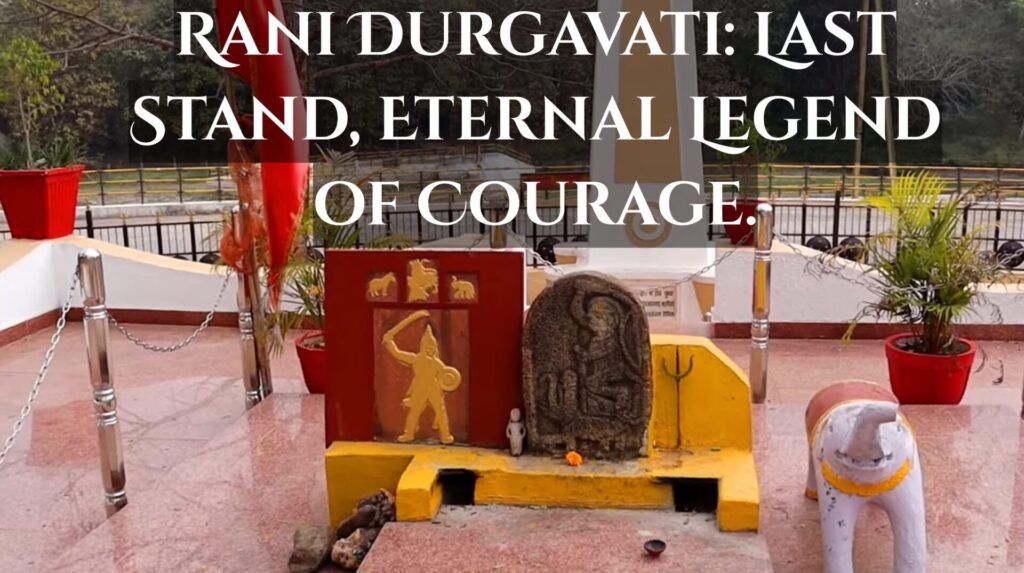
Rani Durgavati was a brave queen of Gondwana in the 16th century. She chose to fight instead of surrendering when facing invading forces and ultimately made the ultimate sacrifice for her kingdom. Today, the Rani Durgavati Memorial honours her bravery and commitment. The memorial attracts visitors and history lovers, offering a look into the life of a queen known for her resistance and strength. With its peaceful surroundings and historical importance, the memorial not only celebrates her heroism but also inspires people to remember the power of courage and selfless devotion.
Lessons for Generations: What Rani Durgavati Teaches Us
The narrative of Rani Durgavati transcends mere historical significance; it serves as a valuable lesson for each generation. Her exemplary courage, leadership, and self-sacrifice continue to inspire us in contemporary society. Living in an era when women were seldom seen on the battlefield, she chose to lead her people with both strength and dignity.
One of the fundamental lessons we can draw from her life is the importance of courage in times of adversity. When the Mughal army launched an attack on Gondwana, she had the option to surrender to preserve her own life; instead, she made the resolute decision to fight. This decision exemplifies that true leadership involves standing firm, even against formidable opponents.
Although she faced defeat, she gained the profound respect of her people. Another key lesson is the commitment to the welfare of one’s constituents. Rani Durgavati was not only a fierce warrior but also a compassionate ruler. She worked tirelessly for the betterment of her subjects, enhancing administration and ensuring their safety. Modern leaders can learn that the exercise of power should prioritise the service of the people rather than the pursuit of dominance.
Rani Durgavati also embodies the principles of self-respect and dignity. When faced with inevitable defeat, she chose to embrace death rather than surrender. For her, the values of freedom and honour far outweighed her own life. This teaches us that in the face of adversity, one should always uphold their dignity. Furthermore, her life delivers a significant message regarding women’s empowerment.
She defied the limitations imposed by her time and demonstrated that women possess the strength to lead, protect, and inspire nations. This serves as an important reminder in today’s society that gender should never constrain one’s aspirations or potential. Finally, the legacy of Rani Durgavati underscores the importance of sacrifice for the greater good. She prioritised the safety and future of her people above her own well-being. It is this spirit of selflessness that fortifies communities and nations.
In our contemporary world, where challenges may differ yet remain formidable, the values exemplified by Queen Durgavati are as relevant as ever. Courage, responsibility, integrity, and sacrifice are not merely historical ideals; they are guiding principles that can inspire us all.
FAQ
Who was Rani Durgavati?
Rani Durgavati (1524–1564) was the warrior queen of Gondwana, renowned for her bravery, leadership, and sacrifice in defending her kingdom against the Mughal army.
When was Rani Durgavati born?
She was born on 5 October 1524 in the Chandel dynasty, which later became connected with the Gond rulers through marriage.
Which dynasty did Rani Durgavati belong to?
She was born into the Chandel dynasty of Mahoba and became the queen of the Gond kingdom after her marriage to Dalpat Shah, son of King Sangram Shah.
What is Rani Durgavati famous for?
Rani Durgavati is famous for her bravery and sacrifice. She fought valiantly against the Mughal general Asaf Khan and chose death over surrender when defeat was certain.
How did Rani Durgavati die?
On 24 June 1564, during a battle with the Mughal forces, she was severely wounded. To protect her honour and avoid capture, she took her own life with a dagger.
Is there any memorial of Rani Durgavati today?
Yes, the Rani Durgavati Memorial in Jabalpur (Madhya Pradesh) and Rani Durgavati University are dedicated to her legacy.
Conclusion
In 1564, on the battlefield of Gondwana, Rani Durgavati, the esteemed daughter of the Chandels and the queen of the Gonds, met her end. Throughout her reign, she demonstrated exceptional leadership, consistently protecting her people with unwavering commitment and displaying an extraordinary courage that earned the admiration of both allies and adversaries alike. As a chronicler of these significant events, I have observed how her legacy has transcended time, with her name resonating among tribes, in marketplaces, within forts, and across forests.
Those who fought alongside her recount their experiences with deep emotion; the women of Gondwana honor her valor through their traditional folk songs, and even her opponents recognize her unparalleled spirit. While we acknowledge the tragic loss of the Rani, it is also imperative to celebrate the enduring legacy she has created. She chose to embrace death with honor rather than surrender to the forces that opposed her.
This choice ensures that her story will endure well beyond the empire that sought to claim her throne. Consequently, it is recorded in the annals of Indian history that, among the numerous rulers who fought valiantly and met their demise, Queen Durgavati will forever be remembered as a figure of unwavering strength in the face of adversity. Through her sacrifice, she brought unparalleled glory to Gondwana, demonstrating that her legacy exceeds any notions of defeat. Even centuries later, her name continues to be spoken with profound respect.
Your feedback means a lot to us.
If you have any questions, suggestions, or concerns, feel free to leave a comment below. We’re here to listen, grow, and improve together.