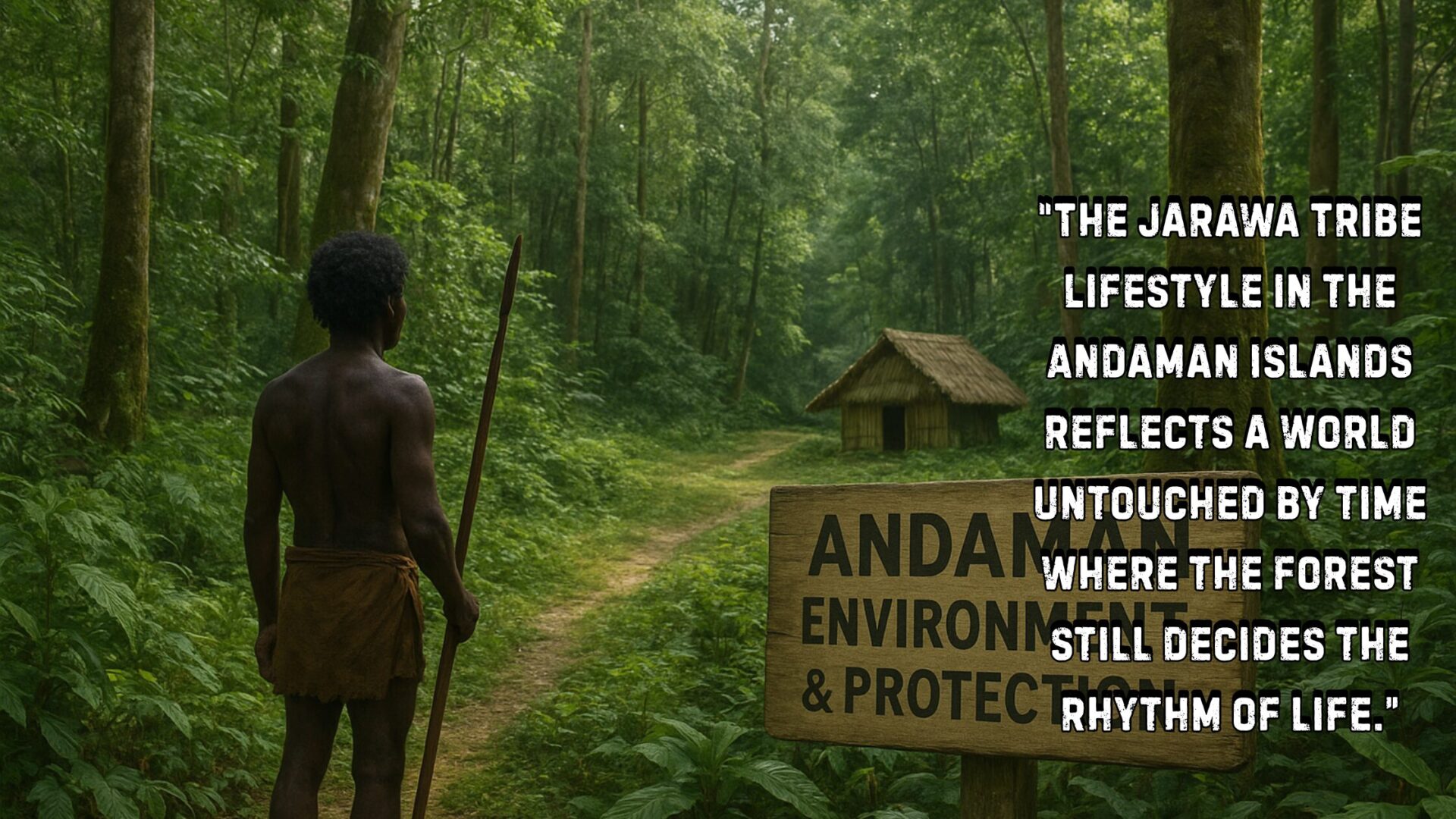
The Jarawa tribe lives in the forests of the Andaman Islands. They are one of the last groups of people who hunt and gather their food. The Jarawa have been living this way for a long time and do not let outsiders into their land. They are very connected to nature. There are only a few hundred Jarawa people. They still speak their own language and have their own special way of living.
They know a lot about the plants and animals in their forest. They have their own traditions and ways of worship. This article will talk about the Jarawa tribe’s daily life and culture. They may not be known by many people, but they have important lessons about living simply and taking care of the environment.
Origins and History of the Jarawa Tribe

The Jarawa tribe is one of the oldest human groups on Earth. They connect us to the early days of humanity. They have lived for thousands of years, long before we had written history, empires, or started farming. Many people believe this tribe existed before Christ.
Ancient Roots: Descendants of the First Humans Out of Africa
Research shows that the Jarawa people are likely descendants of the first humans who left Africa around 60,000 to 70,000 years ago. These early humans traveled along coastlines from the Arabian Peninsula and Southeast Asia to the Andaman Islands, where they established permanent settlements. After settling, the Jarawa became isolated when rising sea levels separated the Andaman Islands from mainland Asia about 10,000 years ago.
This isolation helped keep their unique genes, culture, and physical traits intact, making them one of the oldest and most genetically distinct groups in the world. DNA studies support their African roots, showing similarities between the Jarawa and ancient African hunter-gatherers, such as the Pygmies and the San people.
Prehistoric Settlement in the Andamans
The Jarawa people have lived in the Andaman Islands for over 30,000 to 50,000 years. They have adapted well to the islands’ dense rainforests and coastlines. They know the local plants, animals, and tides very well. Their way of life is still similar to how it was thousands of years ago. They hunt wild boar, gather honey, and fish. They also make tools like wooden bows, arrows, and canoes using traditional methods. This shows their strong connection to early human life.
Encounters with Neighboring Tribes
Historically, the Jarawas shared the Andaman Islands with other tribal groups such as:
The Great Andaman tribes, who had more interaction with colonial powers, frequently clashed with the Jarawas over hunting grounds and territory. For centuries, the Jarawas upheld strict boundaries and avoided external contact, which allowed them to maintain their autonomy. Indeed, every tribal community should strive to preserve that autonomy, as this represents true tribalism.
Culture, Dialect, and Lifestyle of the Jarawa Tribe: The Silent Symphony of the Forest
Deep in the emerald forests of the Andaman Islands, the Jarawa tribe lives in perfect harmony with nature. This harmony is so ancient and balanced that it resembles the living song of the jungle. Their culture is not written or recorded; instead, it is expressed through every hunt, folk dance, and ritual that takes place beneath the towering trees. Their connection to nature is profound, and they believe in and respect the laws they have established.
A Dialect Born from the Forest
The Jarawa dialect is one of the most mysterious languages in the world. It is unwritten, undocumented, and known only to its native speakers. Linguists classify it as part of the Ongan language family, which also includes the Onge and Sentinelese languages. However, mutual intelligibility between these tribes is almost impossible.
While we can speculate about its characteristics, we cannot definitively say how it functions. It is said that the Jarawa dialect captures the sounds of the forest soft, rhythmic, and tonal shaped by generations of speakers who have learned to communicate without disturbing their natural surroundings.
Each word carries a deeper meaning, often related to:
- The behavior of animals,
- The rhythms of the tides, and
- The spirits of the trees and rivers.
For the Jarawa, dialect is not just communication. It is a spiritual link to their surroundings and environment.
Tribal Community and Daily Life
The Jarawa society is egalitarian, lacking kings, classes, or ownership. Each member contributes to their existence and decision-making, which is guided by the laws of nature. They live in small groups of 40 to 50 people, moving through the forest with the seasons in search of food, water, and honey. Their day begins at sunrise. The men go out to hunt and fish, while the women gather fruits, tubers, and wild honey.
Children play freely, learning through imitation how to carve a bow, cross rivers, and climb trees to reach beehives. Their homes are simple leaf shelters made from palm leaves, blending seamlessly into the forest. Nothing is permanent; even their dwellings symbolize freedom and mobility. There are no fixed residences.
Dress, Ornaments, and Body Art
The Jarawas wear minimal clothing made from natural materials such as bark and leaves. They express beauty through:
- Bead necklaces made from shells and seeds,
- Bone ornaments, and
- Painted patterns made of clay and ash.
These decorations are more than just for looks; they represent tribal identity, offer spiritual protection, and express emotions. People use a special red ochre paste during celebrations and rituals. This paste symbolizes life, fertility, and the heartbeat of the forest.
Spiritual Beliefs and Forest Faith
The Jarawa people believe that nature and spirit are the same. Every animal, tree, and river has a soul and energy. If someone disrespects these, they may bring misfortune. They think invisible forest guardians guide their hunters and keep them safe. Before a hunt or during a storm, the Jarawa offer leaves, honey, or fish to honour these guardians.
To treat illness, they use herbs as well as songs, chants, and smoke rituals performed by healers. Their spirituality focuses on caring for the environment. They believe in a balance between giving and taking, survival and respect. This means they honour the resources that nature provides.
Music, Dance, and Expression
Music is intertwined with every emotion, expressing celebration, grief, love, and the joy of success in hunting. The instruments used are ancient yet evoke deep feelings hollow wooden drums, clapping, and rhythmic slaps.
When the community performs folk dances, it is not merely a performance but rather a dialogue with the forest, a way of showing gratitude to the land that sustains them. This practice is common in every tribal community. These communal folk dances strengthen social bonds and teach the younger generations the core values of the tribe: courage, unity, and respect for nature.
A Culture Beyond Time
The Jarawa Tribe culture exists outside modern times, remaining untouched by technology, politics, or civilization. Their silent harmony with the natural world is both fragile and timeless, reminding humanity that survival does not require domination.
The Forest Memory: How the Jarawas Communicate with Trees and Seasons
The Jarawa tribe views the forest as a sentient entity, an elder with collective memory known as the “memory of the earth.” Living within this environment necessitates listening rather than exerting control. To the Jarawa, every leaf, gust of wind, and rustling branch conveys a timeless language that they continue to understand.
Listening to the Trees
The Jarawa people believe that trees are ancient beings that hold the history of rain, wind, and life. Elders often place their hands on tree bark to feel its warmth or mood. A cool trunk means the forest is quiet, while a warm, wet trunk signals that rain is coming. Some trees, like the Andaman padauk, are called “memory trees.” The Jarawa say these trees remember the footsteps of their ancestors.
When the padauk sways, it greets people who once walked on the same land. They look at the tilt of the branches and the texture of the leaves to find directions. The sound of the wind through a hollow trunk tells them which season is approaching. This knowledge is shared like a sacred song.
The Seasons Speak in Silence
The Jarawa people do not recognize just four seasons. Instead, they see twelve smaller cycles, each named after something in nature, like the color of the river, the sounds of certain insects, or the blooming of forest vines. Other tribal communities also do this. For example, when dragonflies show up before sunset, it means the honey season is coming. When the pong-pong bird changes its call, it signals high tide.
Nature gives them many signs like these. The Jarawa do not use a calendar. Instead, they remember events that are connected to the forest. Their memories function like a calendar written in wind and sound. Anthropologists call this “ecological memory.” However, for the Jarawa, it is simply their awareness that connects them to the roots beneath their feet.
Memory Passed Through Generations
Jarawa kids learn through experiences instead of just talking. In the morning, the elders take them to the forest and ask them to close their eyes and listen. They help the kids remember the sound of rain, the buzzing of bees, and the quiet right before a storm.
That’s how they share knowledge, not by lecturing but by helping kids remember. Everyone carries a piece of what the forest knows. Their memories aren’t stored in books; instead, they’re in their senses like smell, touch, and sound. This helps them predict things that even modern science can’t always figure out.
The Hidden Rituals and Forest Faith of the Jarawa Tribe

In the Andaman rainforest, the Jarawa tribe follows a tradition that has existed for generations. They view the forest as their parent, a living, sacred being that watches over them. They believe the forest supports and protects them. Each ritual they carry out is a way to connect with nature’s unseen forces. They ask for permission, show gratitude, and keep balance with the forest spirits. Because they rarely interact with outsiders, many of their customs are still not understood. Like other tribal communities, they express their thanks to nature.
The Forest Offering Ritual
Before hunting, fishing, or gathering honey, the Jarawa people perform a spirit appeasement ritual. They place offerings like honey, fish, or flowers by trees or riverbanks and chant to ask the forest for permission. They believe taking without asking is disrespectful and can lead to misfortune. This ritual helps maintain the sacred bond between humans and the forest.
The Fire of Ancestors
The Jarawas view fire as a way for their ancestors to communicate. At night, families gather around the embers, humming deep songs. They watch the flame closely. If it burns steadily, the spirits are happy; if the smoke flickers, something is wrong. They believe fire lets the dead guide the living, warning them of storms and reminding them to respect nature.
The Hunt Blessing Ritual
Before each hunt, the elders chant to summon the spirits of the animals. They say: “We take only what the forest gives. If we take one, may many more live.” This ritual represents a promise of balance. Jarawa hunters do not kill for pleasure; they protect the forest that provides for them.
Smoke and Healing Rituals
When someone gets sick, a healer, often a wise woman, makes sacred smoke from forest herbs. She waves the smoke over the person and asks the “evil air” to leave. The Jarawas believe the smoke holds the memory of health, blending medicine and magic in a balance of earth and spirit.
The Soul of Their Rituals
The Jarawa rituals serve as a way for the Jarawa people to communicate with the forest, not as religious practices. Each fire, chant, and moment of silence sends the message: “We are still listening. We still remember.” These actions show that spirituality requires only respect, rhythm, and remembrance. The Jarawas continue to be the guardians of the forest’s sacred memory.
Echoes of the Waves: When the Jarawa Tribe Faced the 2004 Tsunami

On the morning of December 26, 2004, the Indian Ocean tsunami approached the Andaman Islands without warning. However, the Jarawa tribe, living in the jungle, took action. Before the giant waves hit, the tribe’s hunters noticed the forest had gone silent. The birds stopped singing, the monkeys climbed the trees, and the sea pulled back quickly.
They recognized these signs from nature. To outsiders, this scene seemed strange. But for the Jarawa, it was a familiar signal. They had heard stories from their elders about “the angry sea that breathes back before it devours the land.” Understanding these signs, the Jarawa quickly left the coast and found safety deep in the forest. They rely on the wisdom of their ancestors to face challenges. When the tsunami struck, it destroyed nearby villages and beaches, but the Jarawa did not lose anyone.
Their survival came from the knowledge passed down through generations. They understand the language of nature in ways that science is still trying to explain. Today, Jarawa elders say, “The sea speaks before it strikes. If you listen, you will know.” Their experience shows how the wisdom of indigenous people can understand things that modern technology cannot.
The Road Through Silence: The Andaman Highway That Cuts Across Jarawa Land

The Andaman Trunk Road (ATR) traverses the lush heart of the Andaman Islands. This modern roadway intersects with the territory of the Jarawa tribe, one of the last remaining indigenous groups in the Andaman Islands, who have lived in seclusion for thousands of years. For tourists, the ATR serves as a convenient shortcut between Port Blair and Baratang Island. However, for the Jarawa, it represents a disruption of their sacred forest. The road has introduced noise and external curiosity into a serene environment that was once dominated by the sounds of nature.
Daily, vehicles pass by, and tourists may catch a glimpse of the Jarawas observing from the forest. However, photographing or filming them is strictly prohibited by law. To protect the tribe’s privacy and prevent contact, the government enforces strict regulations concerning travel in this region. Nevertheless, the highway stands as a reminder of the intersection between two distinct worlds: one that relies on motorized transport and one that retains its deep-rooted traditions. Amidst the silence of the forest, where the road winds through dense foliage, zebras remain still, observing the world around them without stepping outside their own realm.
Guardians of Isolation: Government Rules to Protect the Jarawa Tribe
The Indian government has made strict rules to protect the Jarawa tribe because they believe contact with outsiders could harm their way of life. The Jarawa people, who have only about 350 to 400 members, are one of the last uncontacted tribes in the world. They live in the Jarawa Tribal Reserve, a protected forest area in the South and Middle Andaman Islands. Under the Andaman and Nicobar (Protection of Tribal Tribes) Regulations of 1956, it is illegal for outsiders to enter their reserve, give them gifts, take photographs, or make any contact. These rules exist to prevent dangers such as the spread of diseases, exploitation, and the loss of their culture.
Even common sicknesses like the flu can be deadly for the Jarawa, who have low immunity to modern illnesses. Tourists are also not allowed to give food or drink to the Jarawa, as this can harm their health. The government has restricted movement on the Andaman Trunk Road, which goes through the Jarawa region. Vehicles must travel in groups with strict supervision, and stopping to interact with the tribe is not allowed. These regulations aim to protect the Jarawa culture from outside influences, not to isolate them. The goal is to preserve a way of life that has lasted for thousands of years. The silence of the Jarawa is their strength, and these rules help keep that silence intact.
FAQ
Who are the Jarawas Tribe of Andaman Islands?
The Jarawa tribe is one of the oldest indigenous communities in the Andaman Islands, believed to have inhabited the region for over 55,000 years. As semi-nomadic hunter-gatherers, they rely on the forest and sea for their sustenance.
Where does the Jarawas Tribe live today?
The Jarawa Tribe lives in the Jarawa Tribal Reserve, which covers about 1,000 square kilometers in the South and Middle Andaman. This area is protected by Indian law to preserve their culture and environment.
Why is the Jarawas Tribe kept isolated from the outside world?
The Jarawa Tribe has low immunity to modern diseases, so contact with outsiders can be deadly. To protect them, the government limits access through the Andaman Trunk Road and enforces rules under the Andaman and Nicobar (Protection of Aboriginal Tribes) Regulation of 1956.
What are the main traditions of the Jarawas Tribe?
The Jarawa Tribe hunts and fishes in the forest. They use bows and arrows and make tools from natural materials. They communicate through songs and signs connected to nature.
Can tourists meet or see the Jarawas Tribe?
Tourists cannot interact with or photograph the Jarawa Tribe. This is illegal and can result in punishment. The government urges respect for the tribe’s privacy and culture.
What language does the Jarawas Tribe speak?
The Jarawa tribe speaks the Jarawa dialect, part of the Ongan language family. It is an oral dialect, with no script, that has been passed down through generations without a written form.
Conclusion:
The Jarawa Tribe serves as a powerful reminder that harmony with nature is still possible in our noisy, technology-driven world. Their quiet existence in the Andaman forests reflects a vital truth: life thrives on balance, not control. Though isolated, the Jarawas are not forgotten. Strong government protection keeps them safe from outside harm and disease. Yet, their most profound safeguard is their own way of life, built on deep respect for the forest, the sea, and nature’s rhythms.
The story of the Jarawa Tribe highlights the importance of respect for differences, for silence, and for every community’s right to live freely. They inspire us to understand that true civilization is measured not by tall buildings or speed but by our ability to listen to the forest and coexist peacefully with it. May the Jarawas continue as they have always been the timeless guardians of the Andaman wilderness, preserving the essence of humanity’s earliest connection to nature.
Your feedback means a lot to us.
If you have any questions, suggestions, or concerns, feel free to leave a comment below. We’re here to listen, grow, and improve together.
THANK YOU…………………………………..THANK YOU…………………………………..THANK YOU…………………………………..