The History of India’s Tribes.
You will be surprised to know,
The history of tribes in India is rich and intricate, dating back to ancient times.Many people believe that Indigenous peoples across the globe have some similarities, and the history of tribes in India is especially captivating! Historians and wise elders from these communities often share that the original Indigenous population has deep roots in India. It’s interesting to note that Indigenous peoples in India are categorized into four main groups:
Each group adds a unique thread to the rich tapestry of India’s heritage!
- Negritos
- Proto-Australoid
- Mongoloids
- Mediterraneans
India’s Tribes are among the oldest groups in the Indian subcontinent. Archaeological finds like the Bhimbetka rock shelters in Madhya Pradesh show human life from over 10,000 years ago. Their diverse tribal Dialects and scripts from the Dravidian, Austroasiatic, and Tibet-Burman families highlight their ancient roots.
How many Indian tribes are there?
As of now, India acknowledges the existence of 705 Scheduled Tribes (India’s Tribes) as outlined in the Constitution of India. The Constitution (Scheduled Tribes) Order of 1950 lists recognized tribes. The Government of India regularly updates this list to ensure it stays current.
Indian tribes that have been established since ancient times represent the authentic demographic. Currently, the tribal community is engaged in protests against the government in response to the inclusion of fictitious Adivasi identities for political purposes.
| STATE/UT | Number of Recognised Indian tribes |
| Andhra Pradesh | 35 |
| Arunachal Pradesh | 26 |
| Assam | 23 |
| Bihar (now in Jharkhand) | 33 |
| Chhattisgarh | 42 |
| Goa | 4 |
| Gujarat | 29 |
| Himachal Pradesh | 5 |
| Jammu and Kashmir | 12 |
| Jharkhand | 32 |
| Karnataka | 50 |
| Kerala | 36 |
| Madhya Pradesh | 46 |
| Maharashtra | 47 |
| Manipur | 34 |
| Meghalaya | 15 |
| Mizoram | 16 |
| Nagaland | 16 |
| Odisha | 62 |
| Rajasthan | 12 |
| Sikkim | 4 |
| Ladakh | 3 |
| Tamil Nadu | 36 |
| Telangana | 32 |
| Tripura | 19 |
| Uttar Pradesh | 5 |
| Uttarakhand | 5 |
| West Bengal | 40 |
| Andaman and Nicobar Islands | 6 |
| Dadra and Nagar Haveli and Daman and Diu | 5 |
Many Indians tribes are not recorded in government documents and are at risk of disappearing.
Are there still Indian’s tribes?
Yes, Absolutely.
The India’s tribes people of India live in different regions and protect their ancestral waters, forests, and lands for their livelihoods. They are an important part of India’s culture, environment, and social diversity. Their contributions have greatly shaped the country’s civilization.
India’s Tribes have received education and have advanced in government jobs and industrial work. They have found success in various places. Despite this, they still stay connected to their ancestral jungles.
India is a land of diverse tribes, each adding to its Holy culture. From the forests of Madhya Pradesh and Chhattisgarh to the hills of Odisha and Jharkhand, and the Energetic landscapes of Gujarat, Maharashtra, and the northeast, these tribes bring unique stories and traditions that enrich the heart of the nation.
How many original India’s tribes are there?
According to the latest government records, the Indian Constitution recognizes 705 distinct communities as Scheduled Tribes (STs), They are collectively known as original India’s tribes, spread across various states and union territories.
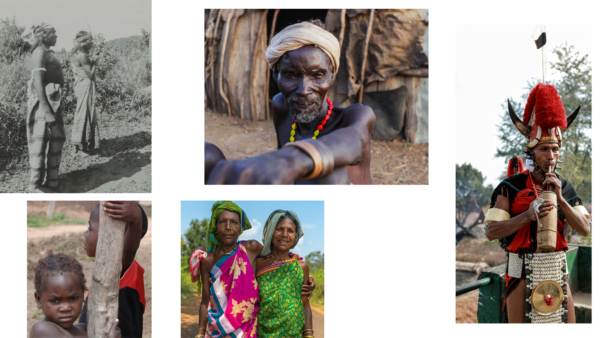
Ethnologists suggest that the actual number of distinct tribal communities in India exceeds 1,000, taking into account sub-tribes, clans, and many groups that remain unrecognised by official classifications. These classifications are administered by the Government of India, primarily through the Ministry of Tribal Affairs.
India’s tribes, the descendants of the original inhabitants of the subcontinent, have preserved rich social and cultural practices that include diverse dialects, customs, and traditions. They engage in unique rituals to worship their ancestral deities and gods,
and their tribal festivals are celebrated with distinct symbolism and spirit. These communities possess deep environmental knowledge, a profound love for animals, and a strong commitment to protecting and promoting natural resources.
Examples of the major original tribes : Bhil, Gond, Santhal, Toda, Jarwa, Khasi, Mizo, Apatani, Bonda, etc
Which is the oldest tribe of India?
In India’s tribal history, the Bhils hold a special place as one of the oldest tribes. They once ruled various tribes in regions like Rajasthan, Gujarat, Malwa, Madhya Pradesh, and Jharkhand. It’s fascinating to think about their rich heritage and the significant role they’ve played in shaping the history of these areas!
FAQ
What languages do India’s tribes speak?
The tribal people of India speak dialects instead of a single language. These dialects lack a written script. Among them are Bhili, Gondhi, and Santhali, along with various sub-dialects.
What challenges do India’s tribes face today?
Tribal communities in India are facing a barrage of challenges, including land loss, pervasive poverty, economic instability, and political interference in education. Housing struggles and urban conflicts add to their plight. Although laws exist to protect their rights, the reality is that implementation is nearly nonexistent.
Are India’s tribal communities considered Hindu?
The tribal people of India are not exclusively Hindu. They possess a unique culture that is deeply connected to nature. Their customs and traditions convey distinct messages to the world through their relationship with nature.
which is the largest tribe in India?
The Bhil community is the largest tribal group in India, making up around 38% of the tribal population, as per the 2011 census conducted by the Government of India.
Conclusion
India’s tribes represent the living embodiment of our nation’s ancient heritage. These vibrant communities have made significant contributions to the world through their profound wisdom, sustainable practices, and harmonious ways of living. All they seek in return is the protection of their water, forests, and lands. Unfortunately, they often face displacement and persistent economic marginalisation.
From the lush forests of the Northeast to the sprawling deserts of Rajasthan, the sacred traditions, deep-rooted connection to nature, and community-oriented lifestyles of India’s tribes offer invaluable lessons in sustainability, resilience, and cultural diversity. In this age of rapid modernisation, we must safeguard the identity, rights, and traditions of India’s tribes—not just for their survival, but to preserve the rich cultural tapestry that makes India unique. Let us stand together to protect these communities and the invaluable heritage they embody.
In free to share your feedback. If you have any issues or any kind of questions, you can comment below. Thank u….
Education and Helth
Information on health and education details will be in a separate blog. Thank you brother for your opinion.
Good work
thank you very much