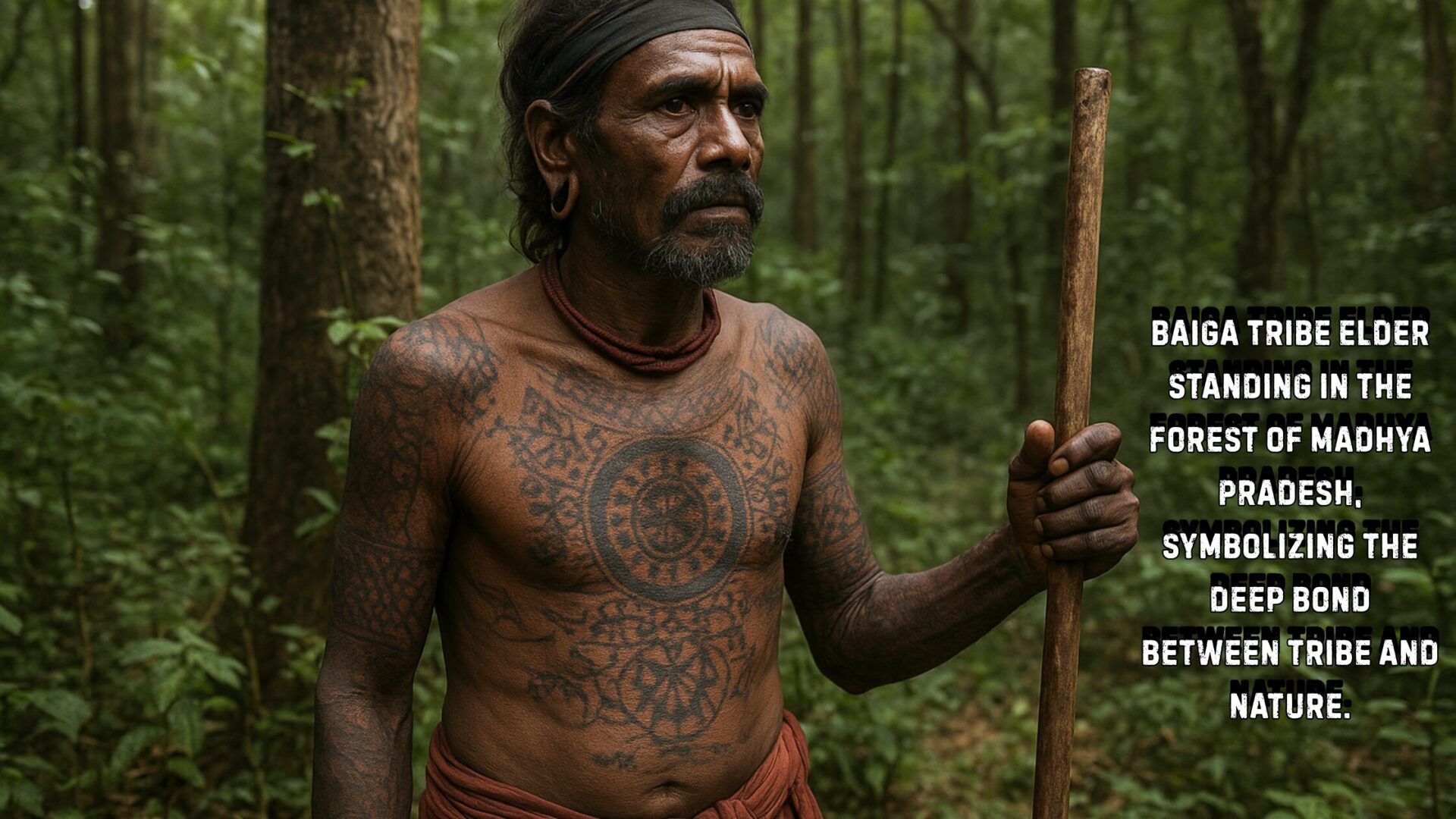
In Madhya Pradesh, the Baiga tribe lives in the forests of Mandla, Dindori, and Balaghat. They have coexisted with nature for centuries and are known as the “guardians of nature’s secrets.” The Baiga people are traditional tribal members who act as healers and spiritual guides, closely connected to the land, trees, and the spirits within them. They keep their ancestors’ culture alive.
The Baiga tribe has deep knowledge of herbs and forest ecology, making them environmentalists long before this term became common. They believe that every plant has a spirit, every river tells a story, and every mountain has a soul. They do not exploit or destroy the environment; instead, they follow nature’s laws, living in harmony with it.
Through ancient tattoos, sacred folk dances, and spiritual rituals, they maintain the wisdom of India’s indigenous people. In a changing world, the Baiga tribe shows us how to balance our lives with nature and reminds us of our special connection to the earth.
Origin and History of the Baiga Tribe Tracing the Roots of India’s Forest Healers
The Baiga tribe is one of the oldest communities in central India. They mainly live in the dense forests of Madhya Pradesh, Chhattisgarh, and Uttar Pradesh. In the past, many tribes lived together, but later, political decisions led to their displacement and settlement in different areas. The elders believe that politics caused the tribe’s division. Experts say the Baiga people belong to the Dravidian ethnic group and may have roots going back to the pre-Aryan era, making them some of the oldest people in the Indian subcontinent.
The name “Baiga” means healer or sorcerer. This shows their deep connection with nature and medicine. Tribal legends say the Baigas are the earth’s first children. They were created to live close to forests and to protect the land, not to farm or harm it. They view nature as their child, and many are ready to give their lives to protect it. Furthermore, they believe the forest goddess, or Mother Earth, has given them the important duty to keep nature balanced through their customs and knowledge of herbs.
Traditionally, the Baigas practiced “Bewar,” a type of shifting cultivation that maintains soil fertility and promotes forest diversity. Over time, as modern forest policies evolved, they encountered limitations on their land and lifestyle, resulting in further displacement in the name of development. As a result, the Baigas have moved deeper into the forests. Despite these challenges, they keep their ancient customs, culture, language (the Baiga dialect), and oral traditions alive. This makes them important guardians of India’s tribal heritage.
Cultural Identity and Traditional Lifestyle of the Baiga Tribe

The Baiga tribe lives in a unique and spiritual way that centers around the forest. They see the forest as their home, healer, and temple. The tribe has small villages made of mud and bamboo huts, usually near rivers and hills. For the Baiga, every part of nature is sacred, and their main belief is to live in harmony with it. They earn a living through shifting cultivation (bewar), gathering forest products, making bamboo crafts, and using herbal medicine.
These skills are passed down from their ancestors. Baiga men are skilled in hunting and gathering, while women are known for their tattoo art (godna). These tattoos represent protection, identity, and spiritual growth, telling stories about life, courage, and a connection to the divine. The Baiga people also have a strong tradition of folk songs and group dances, especially during harvest time and festivals like Karma and Jaitkham.
They use these celebrations to show their gratitude to nature. Their clothing, body markings, and religious rituals reflect a lifestyle that is not focused on material things. This shows a balance between human life and the wild.
Baiga Tribe’s Spiritual Beliefs and Connection with Nature
The Baiga Tribe of Central India exemplifies a profound spiritual connection with nature, holding the belief that every tree, river, and mountain possesses divine energy. For this community, the forest transcends mere utility; it is regarded as a sacred entity that sustains life. Their belief system integrates elements of worship, healing, and sustainability, reflecting a holistic way of living that recognizes the interdependence of nature and spirit.
Through the practice of rituals, the utilization of herbal knowledge, and the preservation of ancestral traditions, the Baiga people maintain a time-honoured equilibrium between human existence and the natural world. This philosophy underscores their deep respect for the Earth and its sacred rhythms.
The Forest as a Living Deity
The Baiga tribe sees the forest as sacred and a key part of their culture. They believe every tree, river, and mountain has a spirit that connects them to nature. The forest is their temple, and nature is their god. The Baiga call themselves “sons of the soil” and view their role as guardians of natural resources, not as owners. They believe that the forest gives them life, food, and healing, and it deserves respect.
Deities and Sacred Rituals
The Baiga tribe adheres to an ancient belief system centered around forest deities. Their supreme god, Bhagwan, is believed to reside in the forest alongside other deities such as Dulha Dev, Bura Dev, and Nag Dev. Each of these gods represents different elements, including fertility, rain, protection, and harmony. Sacred trees known as Devgudi serve as open-air temples where the Baiga community makes offerings of mahua, grains, and animal symbols. These rituals create a spiritual connection between the tribe, their ancestors, and the natural world.
Healing Through Nature and Spirit
Traditional healers, called Guniyas or Baig Vaidyas, play a key role in Baig spirituality. They use herbs, roots, and mantras from the forest to treat illnesses. Their healing practices connect physical health with spiritual beliefs. A Baig healer’s work goes beyond medicine; it involves a deep connection with the forest’s powers. They share their extensive knowledge of natural medicine orally, passing it down through generations. This tradition highlights the wisdom of nature that is shared from one generation to the next.
Life, Death, and the Cycle of Rebirth
The Baiga tribal community believes that all life starts from the earth and eventually returns to it. When someone passes away, their body is buried in the soil, which symbolizes rebirth through nature. This belief comes from their view of ecological balance a continuous cycle of giving and taking that mirrors the natural rhythms of the forest.
Harmony Between Spirit and Survival
The Baiga tribe still performs forest rituals today to thank their gods for good crops, rain, and protection. For them, giving thanks is a key part of their spirituality. They build their homes from bamboo, clay, and wood, showing a simple and sturdy way of living. Their folk songs, dances, and festivals all express gratitude to nature. Through these traditions, the Baiga tribe reminds us that spirituality and ecology go hand in hand. Both are important for achieving true balance and peace.
Hidden Spiritual Secrets of the Baiga Tribe That the World Never Knew
Deep within the dense forests of Madhya Pradesh resides a community whose spiritual world remains shrouded in mystery: the Baiga tribe. Their ancient wisdom, traditional customs and unseen spiritual practices connect them to dimensions of nature that modern science is still struggling to understand and will continue to do so. For centuries, these “sons of the soil” have preserved spiritual knowledge that is passed down only through whispers, chants and dreams that are never written down, never told to outsiders. It is part of tribal culture.
The Secret Language of the Forest
The Baiga community believes that the forest speaks. Through the rustling of leaves, the flight of birds, and the silence after rain, nature reveals its secrets. Elder shamans interpret these signals, guiding their practices in hunting, planting, and healing. This hidden “language of nature” forms their ancestral wisdom, often unseen by outsiders. “The forest warns before it cries,” they say, reminding us that nature communicates before disaster strikes. This powerful message resonates with the heart of many tribal communities.
Rituals of Spirit Possession and Divine Healing
On the night of the full moon, healers from the Baiga tribe perform a ritual called samadhi. They connect with the spirits of their ancestors or forest gods. During this time, they say they receive messages about illnesses, rain, or problems that may come. They use their subconscious mind to help with this. These ceremonies take place around sacred fire circles and include drumming and chanting.
This mix of sounds helps link the spiritual world with the physical world. The tribe believes that healing happens only when nature agrees that the healer is just a messenger. Nature provides calming and positive energy, which helps people get what they ask for. This shows that tribal communities have spiritual energy, whether they realize it or not.
The Sacred Herb Knowledge Passed Through Dreams
This tribe believes that wild plants only show themselves to people chosen by the spirits. A Bega healer might dream about a certain plant or animal, which helps them find a cure for a new illness. This experience has a strong impact on their subconscious. There are no written records of this kind of dream-based plant knowledge; it represents a spiritual connection between the forest and the healer’s spirit.
The Forbidden Sites and Ancestral Spirits
Sacred forests called Devsthals are located in Baiga land. Outsiders are not allowed to enter these forests. People believe these areas are the resting places of powerful ancestors’ spirits. They also store sacred and positive energy. Disturbing these places can bring bad luck or sickness. During the annual prasad, only the senior Baiga priest, known as the Pujari Baiga, can enter these forests. He carries sacred rice and juice made from mahua flowers. This knowledge has been passed down through generations.
The Cosmic Vision of the Baigas
The Baiga community in central India believes in the balance of life, death, and rebirth. They see this belief as part of their culture, not a religion. For them, human life is a brief spark in the eternal energy of the forest, which they consider sacred. This idea, called “jungal dharma” (forest religion), guides how they live. They aim to take only what they need from nature and to give back to the earth.
The Baiga Tribe follow practices that incorporate rituals and traditional medicine, underscoring their deep connection to the land. Their environment provides them with food and carries the wisdom of their ancestors. Their beliefs focus on living in harmony with nature. This reminds us that some areas in India still hold ancient wisdom. For the Baiga, their customs are central to their identity and are sacred, guiding them to live in balance with the ecosystem.
The Sacred Tribal Art, Tattoos, and Symbols of the Baiga Tribe

The Baiga tribe views tattoos as more than just decorations; they see them as living scriptures on the skin. Each dot, line, and pattern has spiritual meaning and represents memories of ancestors. These tattoos connect the body to the spirit of the forest. This ancient art form is called “Godna.” It reflects the tribe’s identity, faith, and protection, and carries an important message for the world.
Tattoos as Spiritual Armor
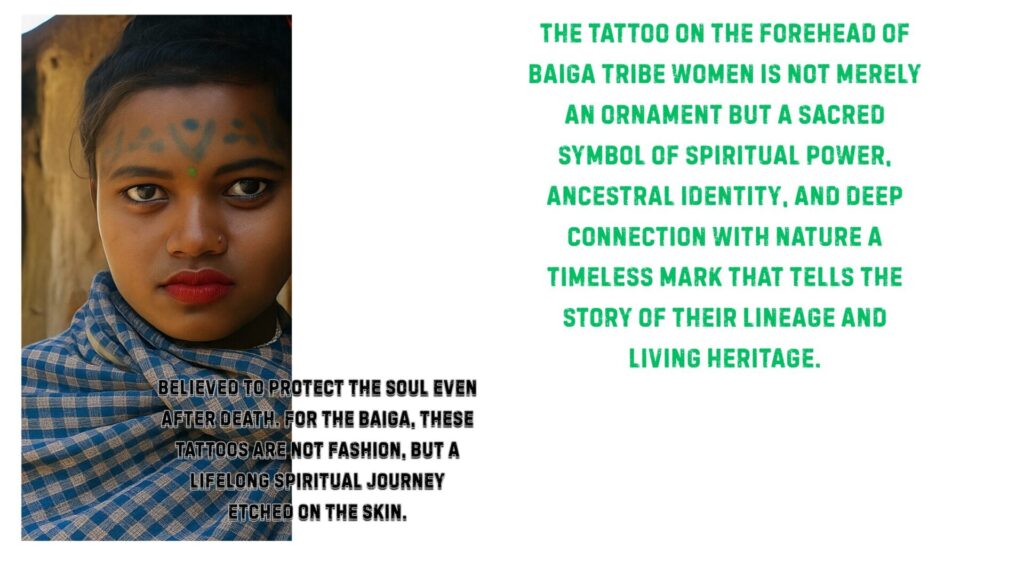
The Baiga tribe holds the belief that the human body is temporary, but the tattooed symbols on it are thought to accompany the soul after death. In their spiritual philosophy, they assert, “A soul without a tattoo is not recognized in the afterlife.” Tattoos are regarded as a form of spiritual protection, shielding the wearer from evil spirits, illness, and misfortune. Each symbol acts as a guardian, guiding the soul safely into the unseen realm after death. This practice is deeply rooted in their culture and beliefs.
Patterns Drawn from Nature
The motifs of Baiga tattoos come straight from the jungle: leaves, vines, sun, moon, birds, and snakes. Each symbol has a meaning.
Every design is hand-drawn by women tattooists called Godhni Bai. They learn this sacred art from their mothers. These women are spiritual artists, not just crafters. Their job is to “unlock the spirit through ink.”
The Ritual of Pain and Purification
Getting a tattoo is viewed as a sacred ritual rather than just a fashion statement. The process includes chanting mantras, making offerings, and applying a herbal paste made from forest roots. The pain experienced during the ritual is seen as a form of purification. It is a moment when the human soul opens to divine energy. This tattoo ritual often occurs during adolescence, symbolizing the transition from childhood to spiritual maturity. For Baiga women, tattoos represent strength, fertility, and pride in their tribal heritage. Ultimately, it is regarded as a legacy of sacred culture.
Tattoos as Social and Cosmic Identity
Each Baiga clan, known as a gotra, has unique tattoo designs that signify lineage and belonging. The placement of these tattoos also holds significant meaning.
- Forehead tattoos are symbols of divine blessings.
- Arms and shoulders indicate strength and protection.
- Chest and stomach tattoos represent life force and motherhood.
Each Baiga shows their social identity, family history, and connection to the universe through patterns on their body. These patterns represent a personal prayer and openly state who they are in the universe.
The Fading but Eternal Art
Many young people in the Baiga tribe are moving away from the tradition of Godna due to modernization and migration. However, older women in the remote forests of Dindori and Mandala still have sacred patterns tattooed on their skin.
They are like living museums of tribal spirituality. For them, these tattoos are not just decorations; they represent their beliefs, customs, and traditions. The Baiga tribe uses ink and pain to express their deep connection to their bodies, souls, and the sacred earth. This strong message can inspire younger generations.
FAQ
Who are the Baiga Tribe of India?
The Baiga Tribe is one of the oldest forest-dwelling communities in Central India. They mainly live in Madhya Pradesh, Chhattisgarh, and Uttar Pradesh. Known as the “sons of the soil,” they see themselves as guardians of the forest and followers of nature-based spirituality.
What is unique about the Baiga Tribe’s lifestyle?
The Baigas live in harmony with nature, relying on the forests for food, medicine, and shelter. They practice sustainable farming known as bewar, or shifting cultivation, and believe that plowing the Earth wounds the Mother Goddess. This belief is why they never till the soil.
Why do Baiga Tribe members wear tattoos?
Tattoos, called Godna, are very important to the Baiga people. They believe tattoos protect them from evil spirits and show their identity in the afterlife. Tattoos also represent their connection to nature and their ancestors. Each tattoo pattern has a special meaning that reflects divine energy and tribal identity.
What are the main deities worshipped by the Baiga Tribe?
The Baiga Tribe worship forest spirits such as Bura Deo, Dulha Deo, and Naga Devta, believing they control fertility and rain, and protect against illness. They express their worship with offerings, music, and dances.
What festivals are celebrated by the Baiga Tribe?
Baiga Tribe’s celebrates traditional festivals such as Bidri Puja, Hareli, Madai, and Chait Parab. Each festival is related to agriculture, seasons, or ancestral spirits and features dance, drumming, and offering rituals.
Are Baiga tattoos still practiced today?
Elderly women in Baiga Tribe villages of Dindori and Mandla wear full-body tattoos as symbols of their faith, though younger generations are not following this practice. Efforts are being made to preserve this art form.
Conclusion: The Eternal Spirit of the Baiga Tribe
The Baiga tribe shows us what it means to live in harmony with nature. Their wisdom, art, and spirituality remind us that progress should not mean breaking our connection to the earth; it should encourage us to live with it. For the Baiga, the forest is their home, their source of life, and their teacher. They send a clear message: nature is all around us. Every tattoo on their skin and every song sung at night expresses an important truth that many people have forgotten: nature is sacred, not just something to use.
Their lives show respect and gratitude for the land that supports them. In our busy, technology-driven world, the Baiga’s simple and balanced way of life offers a different perspective. They help us remember to “Return to your roots, and you will find your future.
This community remains deeply connected to its traditions. The spirit of the Baiga tribe is still alive today. You can hear it in their music, feel it in the quiet forests, and sense it in the earth beneath us. It calls us to listen and respect our connection to the living world. We should work to preserve their culture and protect nature from the impacts of relentless development. Displacement is not what we want. Instead, we should follow the laws of nature.
Your feedback means a lot to us.
If you have any questions, suggestions, or concerns, feel free to leave a comment below. We’re here to listen, grow, and improve together.
THANK YOU…………………………………..
I found your weblog site on google and test a couple of of your early posts. Proceed to keep up the very good operate. I just further up your RSS feed to my MSN Information Reader. Searching for forward to studying more from you later on!…
Thank you, brother, thank you very much