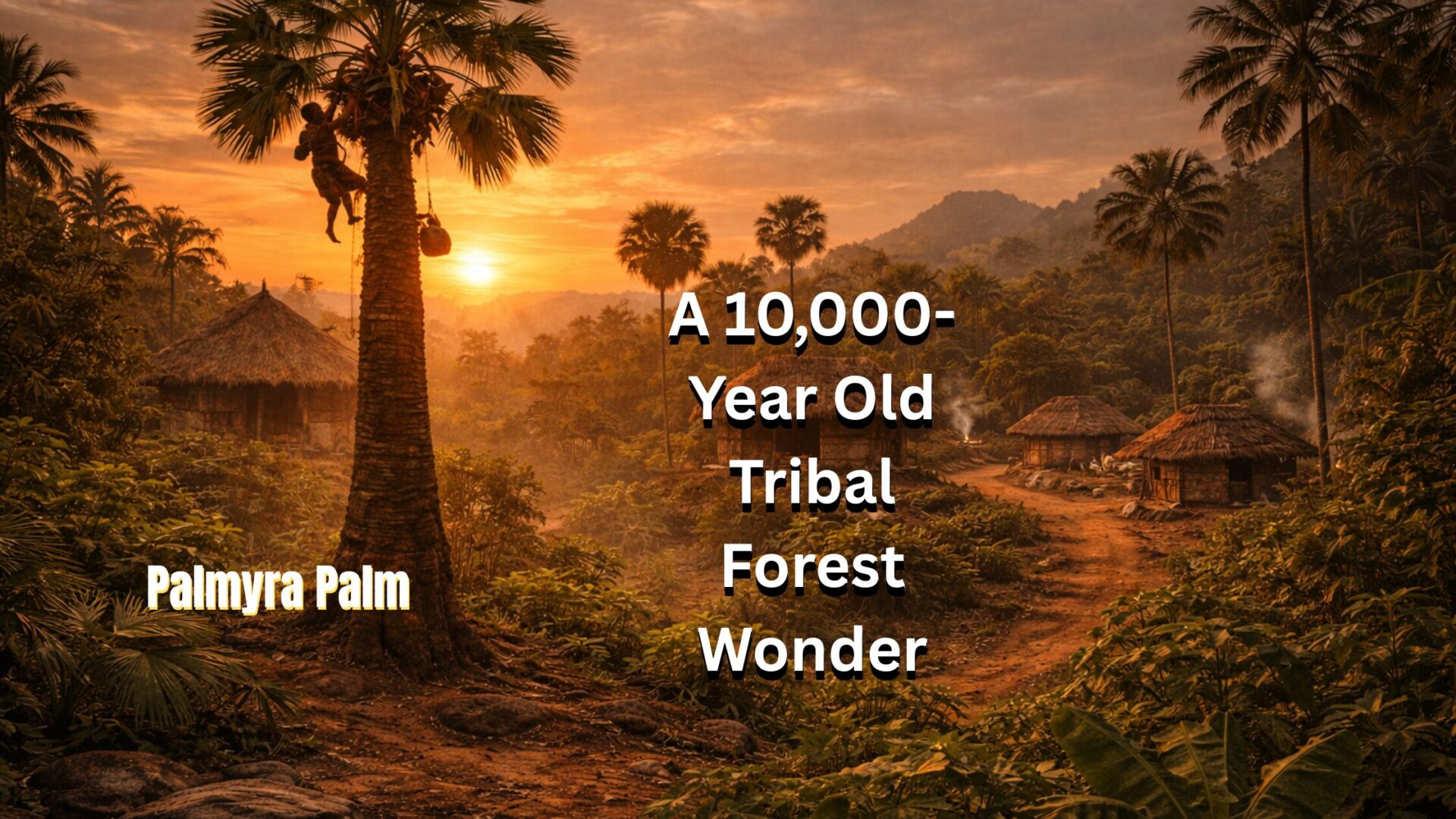
In the wild forests of India, the Palmyra Palm is not just a tree it is regarded as the “Kalpavriksha,” the sacred Tree of Life, by tribal communities. Among tribes like the Bhils, this majestic palm is deeply woven into everyday survival, traditional healing practices, spiritual rituals, and forest-based living systems.
From forest honey bees and Palmyra palm nectar to tribal medicines, taddy (neera), and sacred worship, this tree sustains an entire indigenous life network that has been preserved for centuries through oral traditions and ecological wisdom.
Today, as many forest traditions are slowly fading away, the tribal science associated with the Palmyra Palm is entering the realm of “Lost India,” making it more important than ever to document, protect, and understand its original tribal value.
The Ancient Roots of Palmyra Palm Worship in Tribal History
Before written texts and organized religions came into existence, the forest dwellers of India had already recognized the Palmyra Palm as a sacred tree that sustained life. Archaeological traces, ancient oral histories, and tribal folklore suggest that Palmyra Palm worship dates back to prehistoric forest cultures, where survival depended entirely on native trees and natural ecosystems.
Among Bhil tribal communities, the Palmyra Palm was traditionally believed to be the first tree gifted to humans by forest spirits. Elders passed down folk tales describing it as the “Mother Tree” one that provided food, shelter, medicine, and spiritual protection without asking anything in return.
Historically, tribal settlements were often established near clusters of Palmyra Palms. These groves ensured a constant supply of nectar (neera), edible fruits, palm sugar, medicinal roots, and strong leaves used for housing and everyday tools. Because of this deep dependence, the tree naturally became the spiritual center of tribal life.
Instead of temples, early forest tribes followed tree-based worship systems, where the Palmyra Palm symbolized fertility, blessings of rainfall, and protection from disease. Seasonal rituals performed around the tree marked agricultural cycles, childbirth ceremonies, and marriage blessings creating a living spiritual calendar guided entirely by nature.
This ancient tribal bond explains why, even today, clusters of Palmyra Palms continue to survive in forest villages, even as many other native tree species have gradually disappeared.
How the Palmyra Palm Grows in Tribal Forest Landscapes
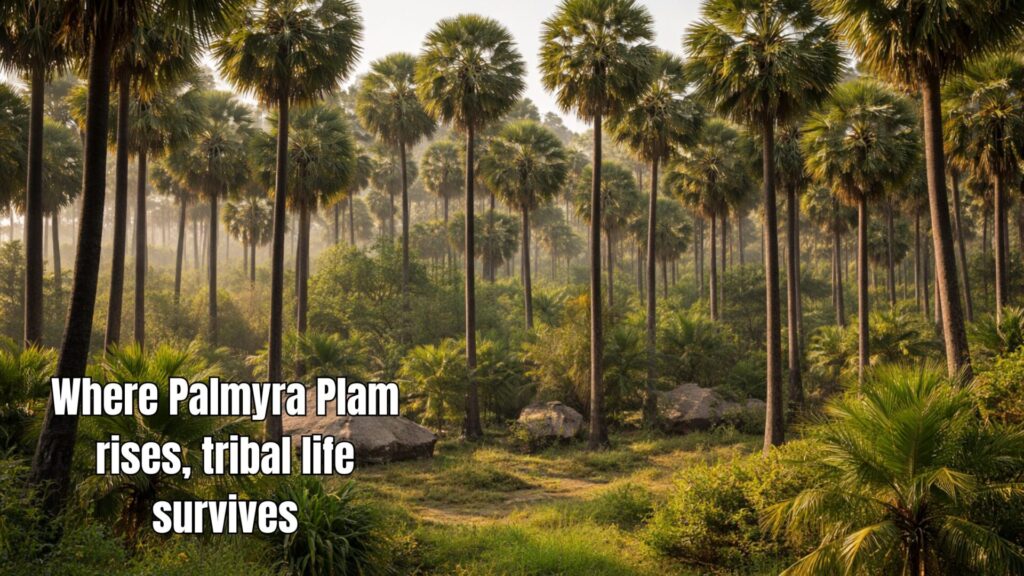
In tribal forest regions, the Palmyra Palm never grows; instead, it grows slowly, peacefully, and in harmony with nature. Elders believe that this palm chooses its own time to rise, often sprouting naturally after monsoon rains when the forest soil becomes soft and fertile.
Fallen fruits are traditionally left beneath the parent tree. Over time, their outer shells slowly break down, allowing the seeds to settle into the moist earth. With the arrival of the next rains, young shoots begin to emerge not through farming or cultivation, but through the forest’s own gentle cycle of regeneration.
The Palmyra Palm takes many years to begin bearing fruit. In most forest regions, a young palm may take 12 to 15 years to mature enough to produce its first fruit clusters. Even then, the flow of sweet neera (tadi) does not begin immediately.
Tribal elders carefully observe the strength of the trunk, the shape of the leaf crown, and the seasonal behaviour of the tree before tapping its nectar. In many regions, neera extraction begins only when the palm reaches 15 to 20 years of age. This patient approach ensures that the tree remains healthy, strong, and productive for decades.
Once fully mature, a single Palmyra Palm can provide nectar, fruit, leaves, and shade for more than 80 to 100 years, becoming a silent, multi-generational companion to tribal families.
In forest wisdom, this slow and steady growth is seen as a lesson:
That which grows slowly, lives for a very long time.
Palmyra Palm & Forest Honey Bees The Hidden Tribal Ecosystem
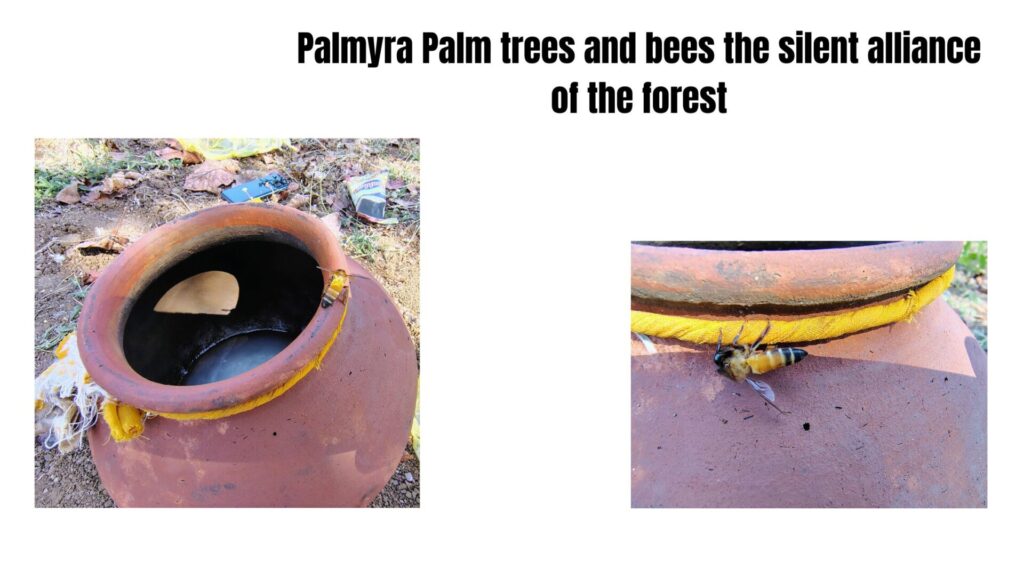
In many of India’s wild regions, Palmyra palm trees quietly create a living world around them. Before honey became a marketable product, tribal communities understood that this tree was one of the most important protectors of wild bees. Its flowers, shade, and nectar from the center of a delicate forest balance that keeps bees, plants, and people connected.
Palmyra Palm as a Nectar Lifeline
During the flowering season, palmyra palm trees produce clusters of small fragrant flowers that release rich nectar in the early morning and evening. In dry forest regions where few large nectar trees bloom, these flowers become a lifeline for wild bees. Tribal elders say that when palmyra flowers bloom, the forest breathes again.
Bees as the Guardians of the Forest
Tribal communities have long monitored the movements of bees around Palmyra forests to gauge the health of the forest. The hum of bees is a sign that the land is balanced and protected. Many villages consider Palmyra bee areas to be sacred forest areas where trees are not cut, and hunting is avoided.
Forest Honey and Tribal Harvesting
Forest honey collected near palmyra trees is considered purer and more medicinal than farm honey. Tribal honey collectors use smoke, dry leaves and traditional climbing tools to carefully collect the honey without damaging the bee colonies. A portion of the honey is always left behind, following the belief that bees are guests of the forest, not resources.
Palmyra Honey as Food and Medicine
Palmyra forest honey is mixed with herbal roots and leaves to treat coughs, fatigue, wounds, and digestive issues. It is also used during childbirth rituals and healing ceremonies as a symbol of strength and sweetness.
The Pollination Cycle
Bees silently pollinate Palmyra flowers, ensuring fruit formation and natural regeneration. This creates a living cycle the tree feeds the bees, and the bees protect the future of the tree.
A Fragile Forest Balance
As forest cover declines, Palmyra bee ecosystems are becoming fragile. When Palmyra Palms disappear, honey, medicinal plants, and micro-ecosystems fade with them — threatening centuries-old tribal survival systems.
The Ancient Origins of Neera (Tadi) in Tribal Forest Culture
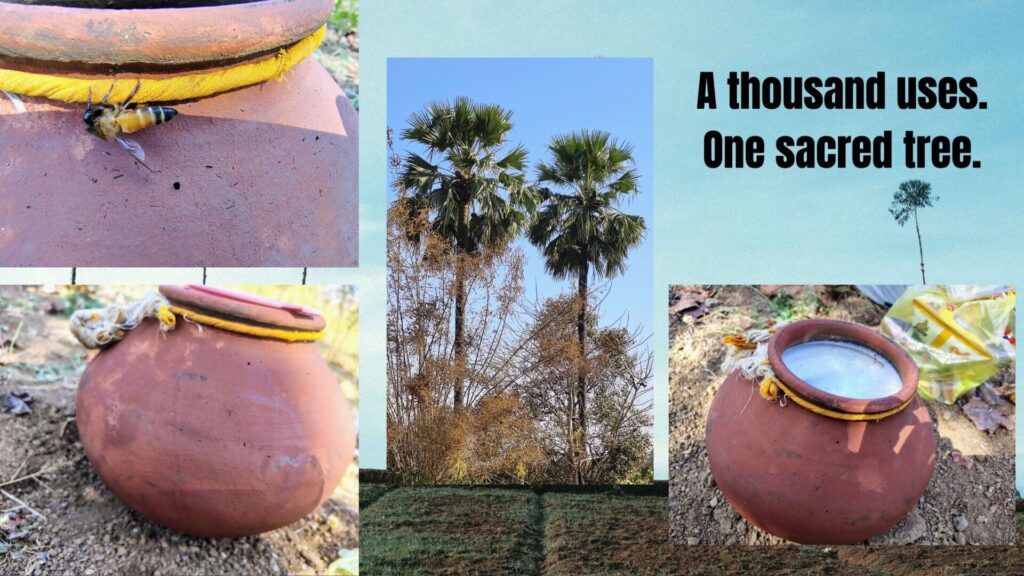
How Forest Tribes Discovered Neera
Long before bottled drinks, markets, and written records existed, forest tribes had already discovered a natural forest nectar flowing inside the Palmyra Palm Neera, locally known as Tadi or Toddy. This discovery did not come from cultivation or experimentation, but from careful observation of nature.
Tribal folklore speaks of honey-hunting ancestors who noticed bees, birds, and squirrels repeatedly visiting certain Palmyra palms at dawn. Elders believe that when forest animals were seen licking the flowering stalks of these palms, humans followed their movements eventually realizing that a sweet, cooling liquid naturally flowed from the tree.
Neera as a Survival Drink
In its earliest use, Neera was not collected for pleasure but for survival. During extreme summer months, when forest water sources dried up and food became scarce, this nectar became a life-saving drink. Its natural minerals, plant sugars, and cooling properties helped forest communities stay hydrated, energized, and protected from heat-related illnesses.
How Neera Was Traditionally Stored
In ancient forest cultures, Neera was not consumed only at the tapping point it was carefully stored for later use long before bottles or refrigeration came into existence.
Tribal communities traditionally used earthen pots (matkas), bamboo containers, and dried gourds to collect and store Neera. These natural containers allowed the drink to remain cool and fresh while preventing rapid fermentation.
Fresh Neera was sealed with layers of forest leaves and mud-soil mixtures to protect it from insects and sunlight. In many regions, the pots were partially buried in cool forest soil or placed near flowing streams to naturally regulate temperature.
To slow fermentation, some tribes added a small piece of Palmyra root fiber, neem twigs, or selected forest herbs to the container. These natural plant elements acted as antimicrobial protectors, helping keep Neera fresh for longer without altering its purity.
Gentle Tapping and Forest Rules
Over generations, tribes developed gentle tapping methods that did not damage the palm. Sacred rules were created only mature trees could be tapped, and nectar could only be taken during specific seasons.
Elders taught that greedy tapping would anger the “forest spirit” and cause the tree to wither forever a belief that ensured sustainable harvesting long before the word conservation came into existence.
Palmyra Palm Neera as Tribal Healing Nectar the Forest Medicine System
In tribal forest cultures, Palmyra Palm Neera has never been treated as a casual drink. It is regarded as a living healing nectar of the Palmyra Palm a natural forest medicine that restores strength, protects life, and supports survival during illness and seasonal weakness.
A Natural Energy Tonic from the Palmyra Palm
Fresh Neera collected from the Palmyra Palm is traditionally given to elders, forest workers, and people recovering from illness. The natural plant sugars, minerals, and enzymes present in Palmyra Palm Neera help restore lost energy after long forest labor, fasting, and physical weakness.
Cooling Summer Medicine of the Palmyra Palm
During peak summer months, Palmyra Palm Neera is used as a cooling forest remedy to prevent dehydration, heat exhaustion, and fatigue. Tribal healers believe that Palmyra Palm Neera cools the blood, balances body temperature, and protects internal organs from heat stress.
Healing for Mothers & Recovery Care
In many tribal communities, diluted Palmyra Palm Neera is given to nursing mothers to restore hydration, improve strength, and support natural recovery after childbirth. Its gentle mineral composition makes Palmyra Palm Neera a trusted forest recovery drink.
Wound Cleansing & Skin Healing
In certain regions, diluted Palmyra Palm Neera is used externally to clean minor wounds, insect bites, and skin infections. The natural antimicrobial properties of Palmyra Palm Neera help prevent infection and promote faster healing.
A Sacred Medicine, not a Market Drink
Tribal elders often remind younger generations that Palmyra Palm Neera is medicine first, beverage second. It is consumed with respect, moderation, and gratitude, preserving its sacred status as a forest-given healer.
Palmyra Palm Leaves in Tribal Housing Building Homes from the Forest
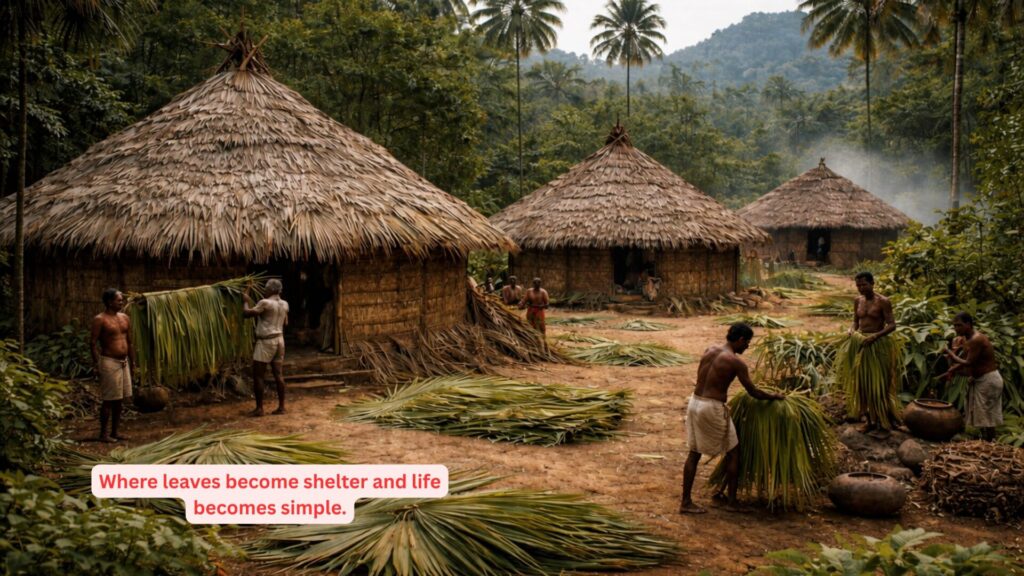
For tribal communities across India, the Palmyra Palm is not only a source of food and medicine, but it is also a forest architect. Its broad, tough leaves have been used for centuries to build natural, climate-friendly homes that protect families from heat, rain, and harsh winds.
The Leaf That Becomes a Roof
Dried Palmyra Palm leaves are traditionally layered to create thick thatched roofs. These roofs naturally insulate homes, keeping interiors cool during summer and warm during winter. In coastal regions like Kerala and Tamil Nadu, Palmyra leaf roofs are especially valued for their resistance to heavy rain and salty winds.
Weaving Forest Walls
Palmyra leaves are woven into mats and panels used for walls, doors, and temporary shelters. These woven panels allow airflow while maintaining privacy, creating homes that breathe with the forest climate.
Flood and Storm Protection
In flood-prone forest belts, Palmyra Palm leaf structures are lightweight and flexible, allowing homes to absorb strong winds and water pressure without collapsing unlike rigid cement structures.
Homes Built in Harmony
Tribal elders believe that homes made from Palmyra Palm leaves carry blessings from the forest. Building shelters from fallen leaves is considered a respectful practice, utilizing what the forest offers without harming the living tree.
These leaf-built homes represent a sustainable architectural system that existed long before modern eco-housing concepts were introduced.
Palmyra Palm in Tribal Rituals & Forest Festivals Sacred Celebrations of Life
Across India’s forest regions, the Palmyra Palm is not only respected it is also celebrated. For tribal communities, this palm becomes a living altar where prayers, gratitude, and life’s most important moments are offered to nature.
Seeking Permission from the Palmyra Palm the Living Deity Belief
In many forest tribal communities, the Palmyra palm is not considered a peaceful thing. It is considered a living forest deity. Before climbing the tree to collect nira (tadi), traditional tappers are expected to seek its permission.
Elders teach that before any tapping begins; a short prayer, a silent bow, or a small offering of flowers and forest grains should be made at the base of the tadi. This act is not symbolic. It is considered necessary for both safety and balance.
Forest tappers believe that climbing a Palmyra palm without respect can invite misfortune. Stories are often told of people who ignored these rituals and later suffered repeated falls, injuries, illness, or even the sudden withering of the tree. Such incidents are interpreted as signs that the “forest deity” has been disrespected.
Because of this belief, tapping is never done in anger, haste, or greed. The Palmyra palm is approached in the same way one would approach an elder, with peace, humility, and gratitude.
Marriage, Birth & Seasonal Celebrations
In many tribal cultures, palmyra palm leaves are woven into sacred arches and doorways during wedding ceremonies, symbolizing fertility, prosperity, and protection. After childbirth, palmyra leaf mats are placed under the mother and newborn to protect them from illness and negative influences.
Seasonal forest festivals also include offerings of palmyra fruits, palm sugar, and forest honey at the base of sacred palm trees. Folk songs and folk dances are performed under these trees to celebrate the blessings of rain and the fertility of the forest.
These rituals are not just traditions. They are a living spiritual covenant between tribal communities and the forest, safeguarding life, balance, and continuity from generation to generation.
Tribal Trade Around Palmyra Palm the Forest Economy of Tadi

For tribal communities, the Palmyra Palm is not only sacred it is also the foundation of a quiet forest economy that sustains families without harming nature. Long before modern markets existed, tribal societies had already created self-reliant trade systems around Tadi (Neera), fruits, and Palmyra leaves.
Neera as a Forest Trade Drink
Fresh palm neera is traditionally traded between villages as a cooling forest drink. It was carried in clay pots and bamboo containers to the weekly forest haat, where it was traded for grain, salt, forest herbs and cloth. Neera was never sold aggressively. It was distributed and exchanged under strict village rules that protected the tree.
Palm Leaves and the Art of Sadaadi Making
Palmyra Palm leaves are dried and woven into sadaadi (traditional palm-leaf mats), baskets, storage containers, fans, roofing panels, and sleeping mats. These handmade products are still traded in forest markets and coastal villages, especially in regions like Kerala, Tamil Nadu, Odisha, Gujarat, and Andhra Pradesh.
Each sadaadi carries tribal craftsmanship, hand-cut leaf strips, sun-drying techniques, and weaving patterns passed down through generations. These products are valued not only for their beauty but for their natural cooling and durability.
Fruits, Palm Sugar & Forest Goods
Ripe Palmyra fruits, palm jaggery, and palm sugar are also traded as forest produce. These goods support local livelihoods and seasonal incomes without the need for large scale farming or chemical processing.
Trade That Respects the Forest
Unlike modern commercial systems, tribal Palmyra trade follows ethical forest rules only fallen leaves are used, tapping is limited to mature trees, and part of the harvest is always left behind for forest regeneration.
This forest-based economy shows that tribal communities did not merely survive on the Palmyra Palm
They built entire life systems around it without breaking the forest balance.
FAQ
What is Palmyra Palm?
Palmyra Palm is a tall tropical palm tree that plays a vital role in tribal forest life. It provides nectar (neera/tadi), fruit, palm sugar, honey-bee habitat, medicine, and building material for tribal communities across India.
Why do tribes worship the Palmyra Palm?
Tribal communities worship the Palmyra Palm as a living forest deity. It is considered a Kalpavriksha (Tree of Life) that protects villages, supports survival, and maintains forest balance.
What is Palmyra Palm Neera (Tadi)?
Palmyra Palm Neera, also called Tadi or Toddy, is a natural sweet nectar collected from mature Palmyra Palms. It is used as a cooling drink, healing tonic, and sacred offering in tribal cultures.
How many years does a Palmyra Palm take to give Neera?
A Palmyra Palm usually takes 15–20 years to become mature enough for Neera tapping in tribal forest regions.
How do tribal communities use Palmyra Palm leaves?
Palmyra Palm leaves are woven into roofing mats, sadaadi (sleeping mats), baskets, fans, storage containers, and eco-friendly house materials.
What are the medicinal uses of Palmyra Palm?
Tribal communities use Palmyra Palm Neera, fruit pulp, palm sugar, and roots as traditional remedies for weakness, dehydration, digestion problems, immunity support, and recovery care.
How does Palmyra Palm support forest honeybees?
Palmyra Palm flowers provide rich nectar for wild honeybees, helping maintain forest pollination cycles and honey production.
Conclusion : The Palmyra Palm, A Living Tribal Legacy
The Palmyra palm is not just a forest tree. It is a living civilization rooted in nature. From nectar (nira/tadi) and forest honey to healing practices, sacred rituals, home building and ethical forest trade, every part of tribal life peacefully revolves around this one magnificent palm.
For centuries, tribal communities have protected the Palmyra palm not through laws or policies, but through belief, gratitude and deep ecological wisdom. They understood that when the Palmyra palm survives, the forest survives. And when the forest survives, life continues.
Today, as modern development slowly pushes these traditions towards extinction, protecting the Palmyra palm also means preserving India’s indigenous forestry, tribal knowledge and living cultural heritage.
Protecting this tree is not just about saving a species.
It is to protect the entire lifestyle.
Your feedback means a lot to us.
If you have any questions, suggestions, or concerns, feel free to leave a comment below. We’re here to listen, grow, and improve together.
THANK YOU…………………………………..THANK YOU…………………………………..THANK YOU…………………………………..